
Gas fees are network charges for processing transactions and executing smart contracts on blockchains that use gas to measure computational work. They help allocate network resources and make transaction spam costly.
Crypto gas fees apply to activities such as sending tokens, swapping cryptocurrencies, and interacting with decentralised applications. Ethereum’s gas overview explains their role in transaction processing.
How do gas fees work?
Each operation consumes gas. A blockchain gas fee reflects this usage multiplied by the applicable price per unit. A token swap generally requires more computation than a basic ETH transfer.
On Ethereum, a transaction that fails during execution still incurs charges for gas consumed. A transaction rejected before inclusion in a block does not incur an on-chain gas charge.
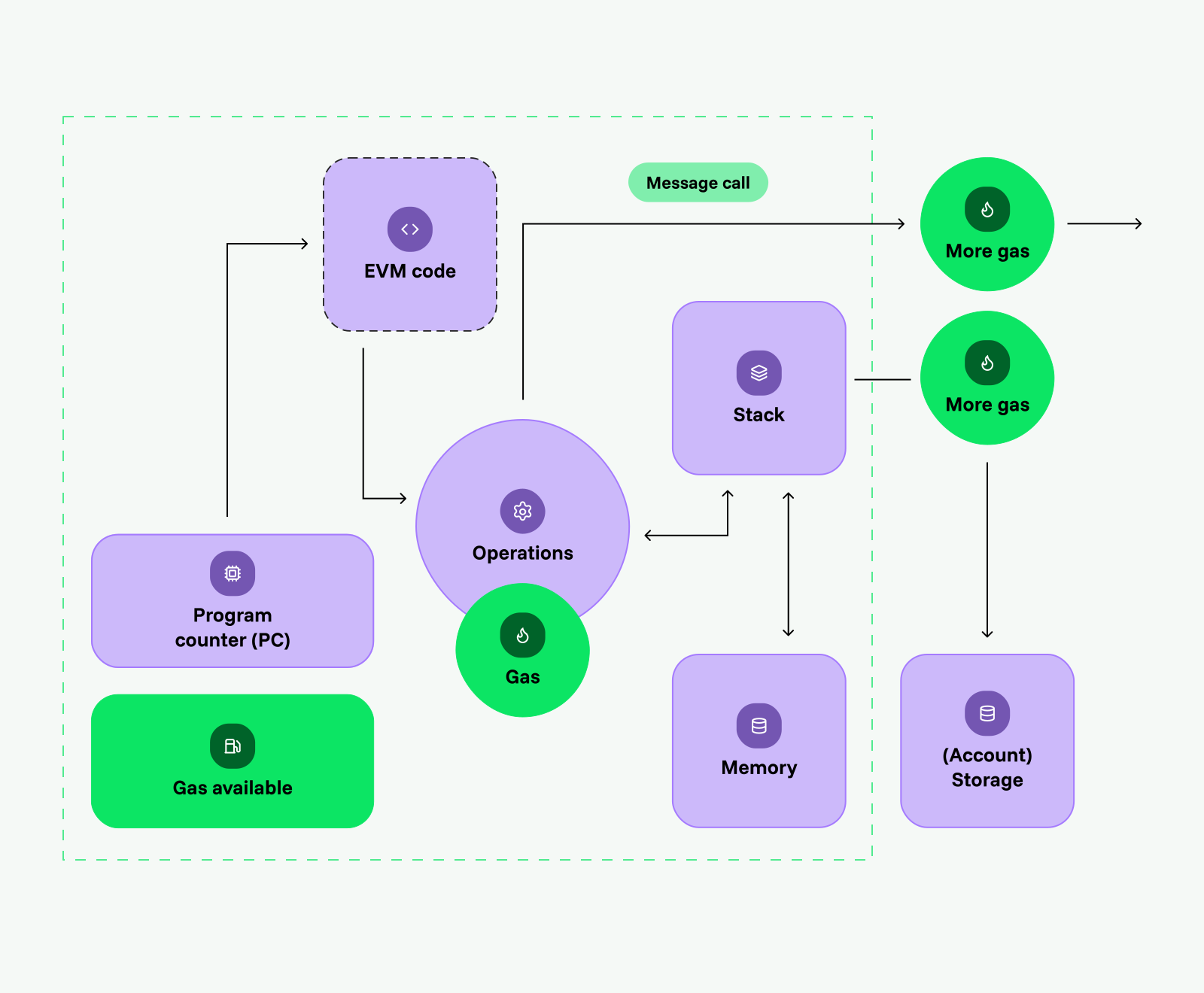
How are gas fees calculated?
On Ethereum, the execution fee follows this formula:
Gas fee = gas used × effective gas price
For an EIP-1559 transaction, the effective gas price consists of the block’s base fee plus the priority fee actually paid, subject to the sender’s fee cap.
The gas limit sets a ceiling on gas consumption. It is different from the amount actually used, so setting a higher limit does not automatically mean paying for every permitted unit.
Who pays gas fees?
For a standard transfer from a self-custody wallet, the sender pays. The recipient does not pay a separate network fee simply to receive the funds.
On Ethereum, users ordinarily need ETH for gas even when transferring an ERC-20 token such as USDC. Some applications support fee sponsorship or let users cover costs in another token through an intermediary. The underlying network fee still exists and is settled in ETH.
Can gas fees be reduced?
Several approaches can reduce transaction costs:
- Wait for lower demand. If a transaction is not urgent, compare fee estimates at different times.
- Use an Ethereum layer 2. Networks such as Base can offer lower fees, provided the application and recipient support that network.
- Review priority settings. A higher tip can increase costs without being necessary for the desired confirmation time.
- Compare the total cost. Include any bridging, withdrawal, or application charges before moving funds to another network.
Layer 2 fees can include both execution costs and a charge for publishing data to Ethereum. Check the wallet’s complete estimate before confirming.
Reducing the gas limit below the transaction’s requirements is not a saving strategy: execution can run out of gas and fail.
What is the difference between gas fees and transaction fees?
Transaction fee is the broader term. Gas fee describes a fee based on metered computational work.
Ethereum uses gas, while Bitcoin transaction fees depend on transaction size and the fee rate offered for block inclusion. Bitcoin does not use Ethereum’s gas model.
An exchange withdrawal fee or payment processor’s service charge is a separate cost and may differ from the underlying blockchain fee.
What are gas fees in Ethereum?
Ethereum gas fees are paid in ether (ETH). Gas prices are commonly quoted in gwei, where one gwei equals 0.000000001 ETH.
For a standard EIP-1559 transaction, the fee has two components:
- Base fee: Set by the protocol according to block demand and burned, removing that ETH from circulation.
- Priority fee: Paid to the validator proposing the block as an incentive to include the transaction.
The sender can set a fee cap. Any difference between that cap and the effective price is not an additional charge.
How to calculate Ethereum gas fees
Consider a basic ETH transfer requiring 21,000 gas, with no contract interaction or additional data. Assume a base fee of 15 gwei and a paid priority fee of 2 gwei:
21,000 × (15 + 2) = 357,000 gwei = 0.000357 ETH
At a hypothetical ETH price of $3,000, the fee would be approximately $1.07.
These figures illustrate the calculation; they are not a live fee quote. Token transfers and smart contract interactions require different amounts of gas.
Which cryptocurrencies have low transaction fees?
Solana and Ethereum layer 2 networks offer options for transfers with relatively low network costs. Their fee structures differ:
- Solana: Fees are paid in SOL and include a base fee plus an optional priority fee.
- Base: Fees cover execution on Base and data publication on Ethereum.
No network is consistently cheaper for every operation. Compare estimates for the same transaction type and check asset and network compatibility.
Why are gas fees so high?
Gas fees can rise when transaction demand exceeds available block capacity. Trading activity, token launches, and NFT minting can increase competition for inclusion.
Complex smart contracts also consume more gas. Separately, a rise in ETH’s market price increases the fiat value of an unchanged ETH fee.
Summary
Gas fees pay for blockchain computation. Understanding gas usage, network demand, and fee settings helps users estimate crypto transaction costs, while supported layer 2 networks and flexible timing can reduce expenses.