

In 2026, crypto payments have become a serious growth channel for online businesses. Travel companies, e-commerce brands, digital platforms, brokers, and global service providers are adding crypto checkout to reach more customers, reduce payment costs, and speed up settlement.
The adoption curve is already visible while the number of crypto accepting companies is steadily growing. Over 25,000 merchants accept Bitcoin, while 39% of U.S. merchants reportedly offer crypto payment options.
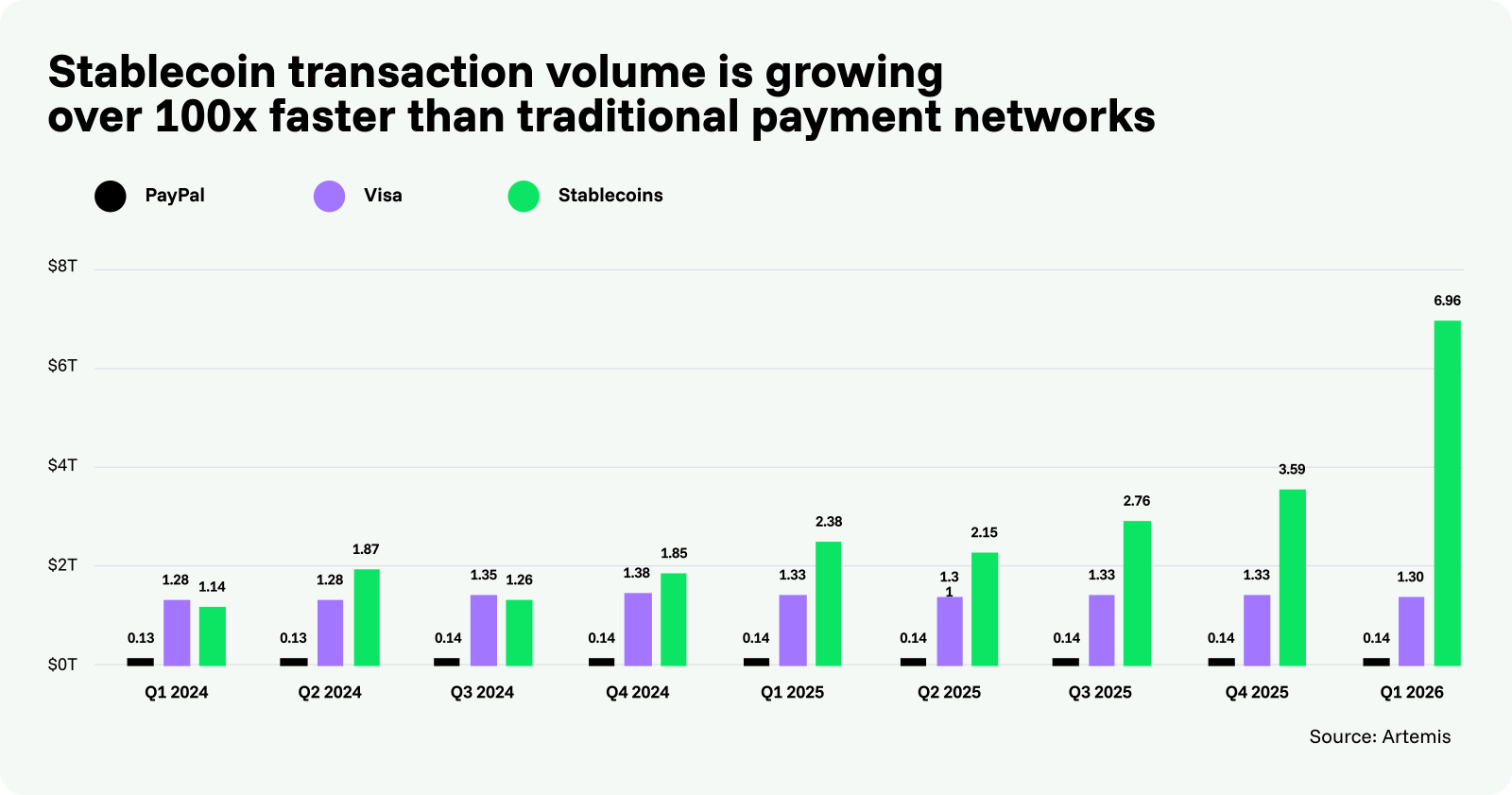
Stablecoins are a major part of this growth. They give businesses a faster and more predictable way to receive international payments without the delays and costs often linked to traditional cross-border systems. Around 39% of crypto owners now use digital assets for purchases, representing more than 750 million people globally.
Online retail, travel, gaming, SaaS, luxury services, fintech, and brokerage platforms are already using crypto payments to serve customers across borders.
What are cryptocurrency payments?
Cryptocurrency payments are digital transactions made with assets such as Bitcoin, Ethereum, stablecoins, and other supported coins or tokens. These payments are recorded on blockchain networks, which makes them transparent, secure, and final once confirmed.
For day-to-day business use, stablecoins such as USDC, EURC, and other supported assets are especially useful. They are designed to track the value of fiat currencies, which makes them more suitable for pricing, settlement, and business accounting.
Modern crypto payment gateways remove much of the operational complexity. A business can accept crypto from customers while settling funds in crypto, fiat, or stablecoins, depending on its treasury needs.
Why more businesses are accepting crypto payments
Companies are adding blockchain payments because they solve several commercial problems at once. They reduce payment friction, support international customers, lower processing costs, and help businesses operate outside standard banking hours.
1. Global customer reach
Crypto works across borders. A customer in one country can pay a merchant in another without relying on local card coverage, bank rails, or slow international transfers. This gives online businesses access to customers in regions where traditional payment options may be limited, expensive, or unreliable.
For digital-first companies, this is a major advantage. Crypto-native users, freelancers, international travelers, remote teams, and younger audiences are already comfortable using digital assets. Adding crypto checkout makes it easier to serve these customers without redesigning the entire payment system.
2. Lower payment costs
Traditional card processing can be expensive, especially for cross-border transactions. Fees, intermediary costs, chargeback handling, and currency conversion can reduce margins.
Crypto payments help lower this pressure. 41% of companies using stablecoins have achieved cost savings of 10% or more compared to traditional methods. For businesses processing frequent deposits, international payments, or high-value transactions, crypto can create meaningful savings over time.
3. Faster settlement
Bank payments can take days to clear. Card payments may also involve settlement delays, rolling reserves, or extra checks. Crypto payments can settle much faster, often within minutes depending on the asset and network used.
This improves cash flow. Businesses can confirm deposits faster, release services sooner, and process withdrawals more efficiently. For sectors such as brokerage, iGaming, digital services, and international commerce, settlement speed can directly affect customer experience.
4. No chargebacks
Blockchain payments are final. Once a transaction is confirmed, it cannot be reversed by a cardholder or bank. This helps reduce chargeback fraud, friendly fraud, and dispute-related costs.
For merchants, this creates more predictable payment operations. It is especially useful for businesses selling digital goods, online services, travel bookings, or high-value products where chargebacks can create heavy operational pressure.
5. Flexible treasury management
Crypto payments can be tailored to most business processes. A company can accept crypto and keep funds in digital assets, convert them into fiat, or use stablecoins for lower-volatility settlement.
CryptoProcessing supports flexible conversion rules, allowing businesses to manage crypto and fiat settlement from one payment setup. This is useful for companies with international suppliers, cross-border operations, or customers paying in multiple currencies.
6. Stronger brand positioning
Accepting crypto also helps businesses present themselves as modern and internationally accessible. For crypto-native customers, a crypto checkout option can be a reason to choose one provider over another.
An online business accepting cryptocurrency can find support for both user acquisition and retention in strong positioning as a crypto-first brand.

Who accepts cryptocurrency? Real-world examples of businesses using crypto payments
Crypto payments are already active across retail, travel, hospitality, automotive sales, digital services, and financial platforms. For businesses researching what business accept crypto, the examples now range from small merchants to global consumer brands.
1. Retail and services
Retail is one of the most visible areas of crypto payment adoption. Block, formerly Square, has enabled Bitcoin payments across point-of-sale terminals, giving small businesses another way to receive customer payments. The company presents this as a way for merchants to get paid faster and keep more revenue from each sale.
Large brands have also introduced or tested crypto checkout. AMC Theatres accepts selected cryptocurrencies for tickets and concessions. Shopify merchants can add crypto payments through supported integrations. Newegg has long accepted Bitcoin and other digital assets for electronics purchases, while Rakuten Japan has supported crypto-related payment options.
2. Travel and hospitality
Travel is another strong example of a business accepting cryptocurrency in real-world commerce. The sector involves cross-border customers, multiple currencies, high booking values, and fast confirmation needs.
Travala.com is a clear case study. The travel booking platform processed more than $100 million in annual travel payments, with around 80% paid in cryptocurrency. Crypto is already being used for hotels, flights, and travel experiences.
Luxury travel providers have also adopted crypto. Mirai Flights, a private jet booking service, reportedly reduced transaction fees after adding crypto payments. For high-value bookings, lower fees and faster settlement can improve both margins and customer experience.
3. Automotive and high-value purchases
Crypto payments are also appearing in the automotive market. Major car manufacturers may not always accept Bitcoin or stablecoins directly, but third-party platforms now allow customers to buy vehicles with crypto.
This is especially relevant for large purchases. Crypto can reduce delays linked to international wires, while sellers can receive confirmed funds through a payment gateway and convert them into fiat when needed.
Luxury goods, private services, and other high-ticket sectors follow a similar pattern. Crypto gives customers another payment route, while merchants gain faster settlement and more control over conversion.
Common concerns about accepting crypto
Many businesses understand the benefits of crypto payments but still worry about volatility, security, compliance, and customer readiness. The right payment provider can reduce these concerns from the start.
1. Volatility
Digital assets can lose value to market fluctuations. However, a business does not need to hold crypto to accept it. With a payment gateway like CryptoProcessing, merchants can accept crypto and convert funds into fiat or stablecoins according to their settlement rules. This allows companies to serve crypto-paying customers while reducing exposure to price changes.
2. Security
Securing crypto assets takes some know-how and effort, especially in the context of payment systems. CryptoProcessing uses real-time risk scoring, secure API keys, address whitelisting, multi-signature withdrawals, and user roles to help protect payment operations. The platform is ISO/IEC 27001 certified, which confirms audited information security processes for handling client data and assets.
3. Compliance
Digital assets have various compliance requirements in different jurisdictions. CryptoProcessing includes KYB, KYC, and AML checks as part of its compliance setup. Transaction activity is reviewed through risk controls designed to help identify suspicious flows before they affect the business.
4. Operational readiness
It takes effort to bring everyone on the same page when it comes to introducing new payment systems. To help facilitate this, CryptoProcessing provides a dashboard, API, documentation, payment automation, reporting tools, and 24/7 support. This helps teams manage deposits, payouts, conversions, balances, and accounting records without building crypto payment operations from scratch.
How CryptoProcessing helps merchants expand business with crypto
CryptoProcessing is a platform designed to help businesses succeed with the help of digital assets. The flow is designed to be simple for both the business and the customer:
- The customer selects crypto at checkout or inside the client cabinet. The system generates a payment address and shows the exact amount to send.
- CryptoProcessing tracks the transfer, checks the payment status, and applies the required risk and compliance controls.
- Once the transaction is confirmed, the business balance is credited. The merchant can then settle funds in crypto, fiat, or stablecoins based on its preferred rules.
For withdrawals, approved payouts can be processed through wallet checks and automation settings, helping businesses send funds quickly while maintaining operational control.
Key platform strengths include:
- 20+ supported cryptocurrencies and tokens
- 40+ fiat currencies
- Stablecoin support
- Flexible crypto and fiat settlement
- 24/7 payout readiness
- KYB, KYC, and AML checks
- ISO/IEC 27001 certification
- Real-time risk scoring
- Secure API controls
- Accounting and reporting documentation
The company has processed €29B+ in payments, handled 40M+ transactions, served over 800 merchants, and brings more than 11 years of crypto payment expertise.
Crypto as a growth tool
Accepting crypto is now a practical way to expand online, improve payment operations, and reach customers who prefer digital assets. It can reduce transaction costs, speed up settlement, lower fraud exposure, and make international payments easier to manage.
For businesses operating across borders, crypto payments can support growth without adding unnecessary complexity. With near-instant conversion, stablecoin settlements, and payment automation, companies can accept crypto while keeping finance and operations under control.
CryptoProcessing helps businesses accept Bitcoin, Ethereum, stablecoins, and other supported digital assets securely and efficiently.
Summary
- Businesses in travel, retail, SaaS, digital services, brokerage, and online commerce are using crypto payments to expand internationally and reduce transaction costs.
- More than 25,000 merchants globally now accept crypto, while merchant adoption continues to grow across major markets.
- Stablecoins help companies process faster, lower-cost cross-border payments with less exposure to volatility.
- Crypto payments can improve cash flow, other supported digital assets chargebacks, and help businesses reach hundreds of millions of crypto users.
- CryptoProcessing provides a compliant crypto payment gateway with 20+ supported cryptocurrencies, 40+ fiat currencies, flexible settlement, 24/7 support, and zero hidden fees.
Accept crypto with CryptoProcessing.