
Crypto fees vary depending on the blockchain, the asset being sent, network congestion, and the service used to process or convert the payment. A Bitcoin transfer, an Ethereum token payment, and a USDC payment on a lower-cost network can all carry very different costs.
That is why understanding crypto payment fees is important for businesses handling settlements, ecommerce payments, or global payouts.
What are crypto payment fees
Crypto payment fees are the costs required to have a blockchain transaction processed and finalized. In most cases, the network fee is paid to miners or validators, depending on the blockchain’s design. On Ethereum, gas fees pay for the computation needed to process transactions, while Bitcoin fees reflect demand for block space.
Businesses also need to separate network fees from service fees. A blockchain may charge only a small on-chain fee, while a payment provider, exchange, or wallet platform may add conversion, settlement, or withdrawal charges on top. That difference is essential when comparing raw blockchain pricing with real payment processing costs.
Types of crypto payment fees
Network fees
These are the on-chain fees paid to process a transaction. They vary by congestion, network design, and transaction complexity. On Ethereum, gas fees rise when block space demand increases. On Bitcoin, fees depend on transaction size and mempool demand.
Payment gateway fees
A crypto payment provider may charge a service fee for acceptance, conversion, settlement, reporting, or compliance tooling. This fee is separate from the blockchain fee and is usually tied to the merchant service rather than the network itself.
| Fee Comparison | CryptoProcessing | Traditional Card Processor |
|---|---|---|
| Transaction Fee | 0.8%-1.5% | 2.5%-4%+ |
| Setup Fee | Free | Often charged |
| Monthly Fee | None | Common |
| Chargebacks | No | Yes |
| Rolling Reserve | No | Often yes |
| Cross-Border Extra Costs | Lower / varies | Common |
Exchange and conversion fees
If a business converts crypto into fiat, or swaps one digital asset for another, there may be trading fees, spread costs, or liquidity-related slippage. These can affect business margins even when the blockchain fee itself is low.
Wallet and withdrawal fees
Wallet platforms and exchanges may charge withdrawal fees. In some cases these are dynamic and follow the underlying network fee. In other cases they are fixed by the platform. That means crypto wallet fees do not always equal the real blockchain transaction cost.
How crypto fees are calculated
The main factors, generally, in calculating crypto fees are:
- Network demand and congestion.
- Transaction size or gas usage.
- Priority settings for faster confirmation.
- The blockchain itself, including whether it is a base layer or an L2.
On Ethereum, gas fees are calculated using gas consumed, base fee, and any priority tip. Bitcoin fees are tied more directly to transaction size in bytes and market demand for inclusion in a block.
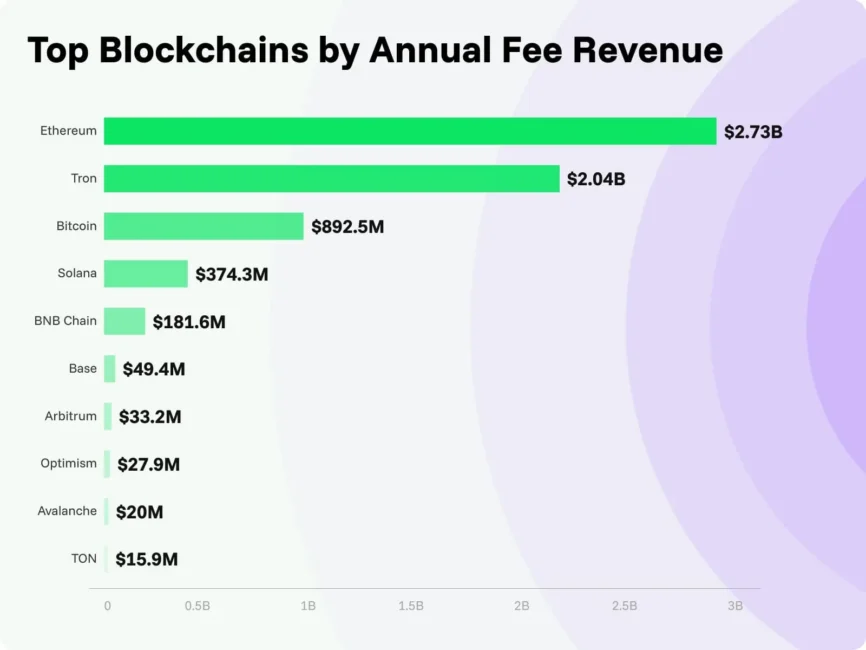
Businesses should never talk about crypto fees as if they were one number. The real cost depends on the asset, the chain, the timing, and the payment stack sitting around the transaction.

Crypto fees by network
| Cryptocurrency | Symbol | Estimated Average Network Transaction Fee (2026) | Notes |
|---|---|---|---|
| Bitcoin | BTC | 0.0000059 BTC | Around $0.40 average recent fee level |
| Litecoin | LTC | 0.000049 LTC | Around $0.0027 average fee equivalent |
| Bitcoin Cash | BCH | 0.00001 BCH | Typically very low, often under $0.01 |
| DogeCoin | DOGE | 0.5 DOGE | Usually low-cost retail transfer chain |
| Test Coin | TCN | N/A | No reliable current public fee data found |
| Dash | DASH | 0.00001 DASH | Usually fractions of a cent |
| Zano | ZANO | 0.01 ZANO | Low-fee privacy chain estimate |
| Binance Coin | BNB | 0.0005 BNB | Often around $0.15-$0.30 depending on gas |
| Tron | TRX | 3-7 TRX | Roughly $0.75-$1.80 depending on bandwidth/energy |
| Ethereum | ETH | 0.0001 ETH | Around $0.20-$2+ depending on congestion |
| Tether USD ERC20 | USDTERC20 | $3-$10 | Uses Ethereum gas model |
| Tether USD TRC20 | USDTTRC20 | $0.50-$1.50 | Uses Tron network fees |
| USDC ERC20 | USDCERC20 | $3-$10 | Standard ERC20 transfer on Ethereum |
Crypto vs traditional payment fees
Traditional payments often include card processing fees, interchange, acquirer charges, FX spreads, and chargeback exposure.
Crypto fees are usually more visible at the network level, even if provider fees still need to be added. The business advantage is that on-chain transfers can reduce some intermediary costs and remove chargeback risk from completed blockchain payments.
Stablecoin payment networks are also being positioned for treasury, supplier, and payroll use cases by firms like Circle.
That does not mean crypto always wins in the crypto fees vs fiat fees debate. A cheap domestic bank transfer can still be more efficient than a poorly routed on-chain payment.
Ultimately, the cost benefit is strongest when crypto is used on the right chain for the right payment type.
How to reduce crypto payment fees
Choose low-fee blockchains
Using a lower-cost network is often the fastest way to cut blockchain fees. TRON promotes low-cost USDT transfers, and multichain stablecoin support means businesses are not locked into one expensive route.
Use stablecoins for payments
Stablecoins reduce volatility and often make fee planning easier. USDC and USDT are widely used for business payments because they combine digital settlement with a dollar-linked unit of account.
Optimize timing
On congested chains such as Ethereum, timing matters. Sending during lower-demand periods can reduce gas fees because the base fee adjusts with network usage.
Use a crypto payment gateway
A gateway can optimize routing, automate settlement, and simplify reporting. Businesses accepting crypto payments or using a crypto wallet for business often save more by improving the whole payment flow than by focusing only on raw network fees.
Business use cases
- Ecommerce merchants reducing payment processing costs
- SaaS platforms taking global payments
- B2B settlements without multiple banking intermediaries
- High-risk sectors that face higher card friction
In these cases, the total crypto payments cost includes more than the blockchain fee. Settlement design, conversion policy, and payment routing all affect the final number.
Common misconceptions about crypto fees
There are three main misconceptions when discussing blockchain fees:
- “Crypto is always cheaper.” Not always. Ethereum mainnet can be expensive during peak demand.
- “Fees are fixed.” They often change with congestion and transaction complexity.
- “Bitcoin is the cheapest option.” It can be efficient, but many stablecoin payments on lower-cost networks are cheaper.
Final thoughts
Crypto fees depend on network choice, timing, transaction type, and the business infrastructure wrapped around the payment. Bitcoin fees, Ethereum gas, stablecoin routing, and provider charges all work differently.
Businesses that choose the right chain, use stablecoins where appropriate, and rely on optimized payment tooling can reduce costs significantly while keeping settlement fast and flexible.
FAQ
Are crypto payments cheaper than credit cards?
They often can be, especially when using lower-cost networks and efficient settlement tools. The answer depends on the chain, the asset, and any provider fees.
Which crypto has the lowest transaction fees?
There is no single answer, but stablecoin payments on lower-cost networks such as TRON and many L2-compatible environments are often far cheaper than Ethereum mainnet.
Why are Ethereum fees sometimes high?
Ethereum fees rise when block-space demand rises because the gas model adjusts to congestion.
Can I avoid crypto fees completely?
No. Most blockchain transactions require some network fee. You can reduce fees, but not eliminate them entirely.
How much does it cost to send Bitcoin?
It varies with congestion and transaction size. On the accessed BitInfoCharts page, the average Bitcoin transaction fee shown was about $0.255, but that can change materially over time.