Payment acceptance is often treated as a routine operating cost. In reality, it can quietly erode margins through card processing fees, cross-border markups, settlement delays, failed payments, and fraud-related losses.
As such, the logical challenge for businesses in 2026 is reducing payment processing costs without harming the customer experience.
Crypto removes some of the intermediaries that make traditional payment flows expensive, allows settlement on lower-cost networks, and gives merchants access to stablecoin payments that can move globally without the same FX and banking friction.
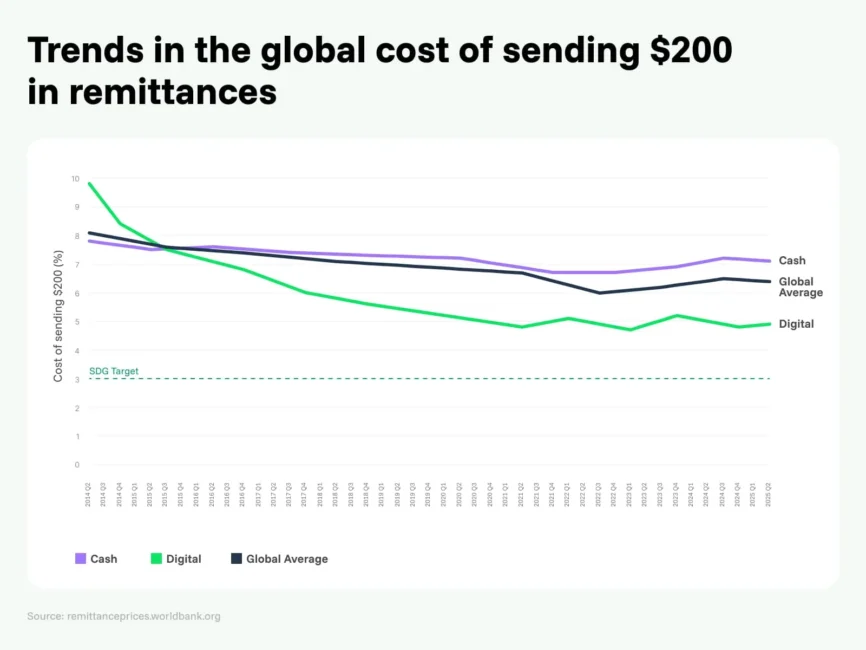
This is especially relevant for digital services, SaaS, international B2B payments, and merchants selling across multiple regions. Cross-border payments still remain more costly, slower, less accessible, and less transparent than domestic payments, according to the BIS, while the World Bank says the global average cost of sending remittances was 6.49% in March 2025.
Why traditional payment processing is expensive
Traditional payment systems involve several participants. A single transaction may pass through the customer’s bank, a card network, a payment processor, an acquiring bank, and sometimes an FX provider or local payment partner.
That structure creates multiple cost points:
- Payment processing fees charged by card processors and payment service providers.
- Interchange fee costs built into card acceptance.
- Cross-border payments surcharges and currency conversion spreads.
- Chargeback risk and fraud management overhead.
- Costs tied to settlement time, failed payments, and manual reconciliation.
How crypto payments reduce processing costs
Crypto changes the payment flow in a few important ways.
First, blockchain payments reduce the number of intermediaries involved. Second, stablecoins such as USDT and USDC give merchants access to digital dollars without the volatility of more speculative assets. Third, settlement can happen much faster, which improves cash flow and reduces treasury friction.
The main cost advantages usually come from:
- Lower transaction fees on a suitable blockchain.
- Fewer third-party markups.
- No chargebacks on completed on-chain transfers.
- Faster settlement and simpler reconciliation.
- Better efficiency for international transfers.
For businesses focused on reducing transaction costs, crypto works best when it is implemented as part of a broader payment optimization strategy, rather than haphazardly added as a checkout option.
The biggest savings come from using stablecoins, choosing the right network, and routing payments through a business-ready gateway that handles settlement, reporting, and conversion

Key ways to reduce costs using crypto
There are five main ways that one can reduce payment costs with crypto.
Accept stablecoins instead of volatile assets
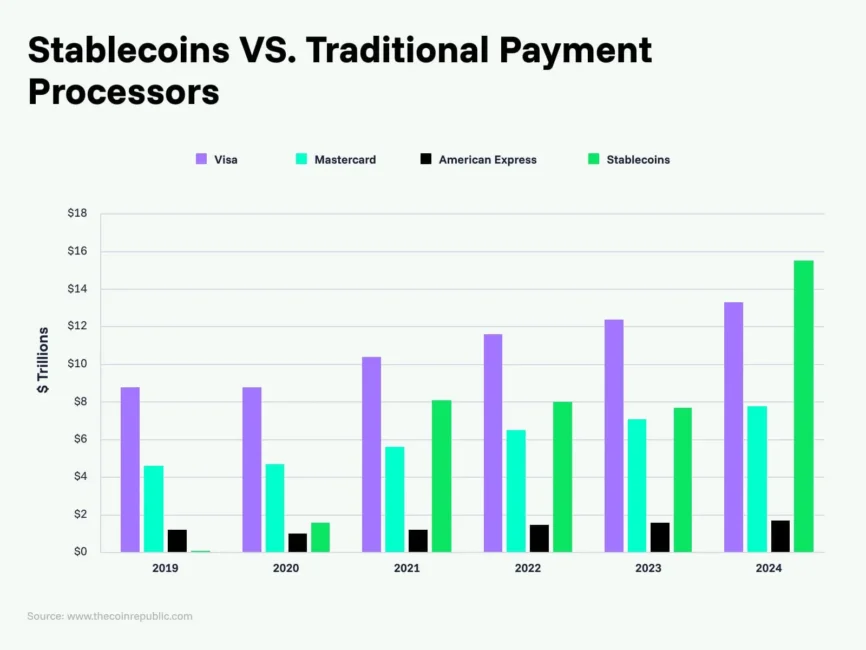
Stablecoin payments are usually the best entry point for business use. They keep the value of the payment predictable while preserving the speed and reach of blockchain rails.
USDC is natively supported on many blockchain networks, while USDT is also available across multiple major chains, giving businesses flexibility in how they accept and move funds.
This helps businesses:
- Avoid volatility-related losses.
- Invoice in a familiar unit of account.
- Support global customers more easily.
- Improve financial efficiency in treasury management.
Use a crypto payment gateway
A crypto payment gateway makes digital assets for business usable at scale. Instead of manually handling wallets and confirmations, merchants can automate payment acceptance, settlement, reporting, and conversion.
A gateway can also help with:
- Wallet generation and payment routing.
- Fiat conversion.
- Merchant reporting.
- Compliance and monitoring.
- Checkout integration.
Businesses exploring accepting crypto payments usually save the most when the gateway fits into existing billing and checkout flows.
Optimize transaction routing
Network choice has a direct impact on transaction cost. Using a low-fee network can significantly reduce gas fees compared with congested chains.
A sensible routing strategy may involve:
- Using TRON for low-cost USDT transfers.
- Using Polygon or L2 networks for lower-fee stablecoin payments.
- Avoiding high-fee periods on congested networks.
- Matching the network to the payment size.
Eliminate chargebacks and fraud-related losses
Card payments carry dispute risk. Crypto payments on-chain are typically irreversible once confirmed, which reduces chargeback exposure and lowers support overhead for many merchants.
That can improve:
- Approval rates in some industries.
- Back-office efficiency.
- Fraud-related loss management.
- Revenue predictability.
Automate settlements and payouts
Faster settlement improves working capital. Businesses can accept crypto, convert it when needed, and use it for supplier payments or treasury operations with less banking friction.
For firms making international transfers, tools for sending crypto can reduce delays and simplify cross-border payouts.
Cost comparison: crypto vs traditional payments
| Factor | Traditional payments | Crypto payments |
|---|---|---|
| Transaction fees | Often includes processor fees, interchange, FX, and partner markups | Often lower, depending on network and gateway |
| Settlement time | Can take up to 5 days | Often near-instant to same day |
| Cross-border costs | Usually higher due to banking and conversion fees | Often lower with stablecoins |
| Chargeback risk | High in card-based commerce | Minimal on confirmed on-chain transfers |
| Operational overhead | Higher reconciliation and dispute workload | Lower with automated routing and settlement |
Where businesses see the strongest gains
Crypto payment optimization is often most useful in these cases:
- E-commerce merchants looking to reduce card processing costs.
- SaaS platforms billing international customers.
- High-risk industries facing lower approval rates or higher fees.
- B2B businesses handling global invoicing and partner payouts.
A merchant does not need to replace all payment methods at once. Many start by adding crypto as an option alongside cards and local methods, then expand based on demand and cost savings.
Challenges and how to manage them
The main challenges of accepting crypto are manageable considerations rather than major obstacles.
- Volatility: Use stablecoins or auto-convert to fiat.
- Regulation: Work with a compliant provider.
- User adoption: Offer crypto as one payment option, not the only one.
- Integration: Use APIs, plugins, or hosted payment pages.
The easiest way to reduce risk is to use a provider built for business payments. CryptoProcessing offers businesses a way to accept and manage crypto payments without building the full stack internally.
How to get started
When reducing payment processing costs with crypto, the steps are usually straightforward.
- Choose a crypto payment provider, such as CryptoProcessing.
- Set up merchant wallets and settlement preferences.
- Integrate checkout through API, plugin, or hosted page.
- Decide whether to keep crypto or convert to fiat.
- Test payment flows, reporting, and refund policies.
- Launch with stablecoins first, then expand if needed.
Naturally, it is important to choose a reputable provider, one that offers reliable support, clear reporting, strong security standards, and flexible settlement options.
FAQ – reducing transaction costs
Are crypto payments really cheaper than credit cards?
They often can be, especially for cross-border payments or businesses with high card fees. The actual savings depend on the network, asset, gateway, and settlement setup.
Which crypto has the lowest fees?
That depends on the network. In business use, stablecoins on lower-cost networks are often more efficient than using major assets on expensive chains.
Can I accept crypto and receive fiat?
Yes. Many payment gateways allow auto-conversion so merchants can accept crypto while settling in fiat.
Is it legal to use crypto for payments?
That depends on the jurisdiction and provider setup. Businesses should use compliant partners and confirm local requirements.
How fast are crypto settlements?
Many blockchain payments settle much faster than bank transfers or card payouts, often the same day and sometimes within minutes.
The BIS said in 2025 that cross-border payment targets were still not being met, with only 35% of global cross-border retail payments credited within one hour.