

Thousands of businesses now accept crypto worldwide, and the true number is likely far higher than any single public directory can capture.
BTC Map alone listed 23,051 merchants accepting some form of Bitcoin payment as of April 1, 2026. That does not include every merchant using broader crypto checkout tools, stablecoin invoicing, or private payment links, so the full number of businesses that accept crypto is larger.
The number is growing because the payment case is getting stronger. Businesses are looking for lower-friction global payments, faster settlement, stablecoin options, and a better way to serve customers who already hold digital assets.
In the U.S., PayPal and the National Cryptocurrency Association said in January 2026 that 39% of surveyed merchants already accept crypto at checkout, while 84% believe crypto payments will become common within five years.
This report looks at the current merchant count, where adoption is growing fastest, which types of businesses accept crypto payments, and why so many companies are now taking another look at crypto checkout.
How many businesses accept crypto worldwide
A cautious answer is at least tens of thousands of businesses. Public merchant directories already show substantial numbers. BTC Map’s live dashboard shows more than 23,000 merchants globally accepting Bitcoin payments, with more than 13,000 recently verified in the last year.
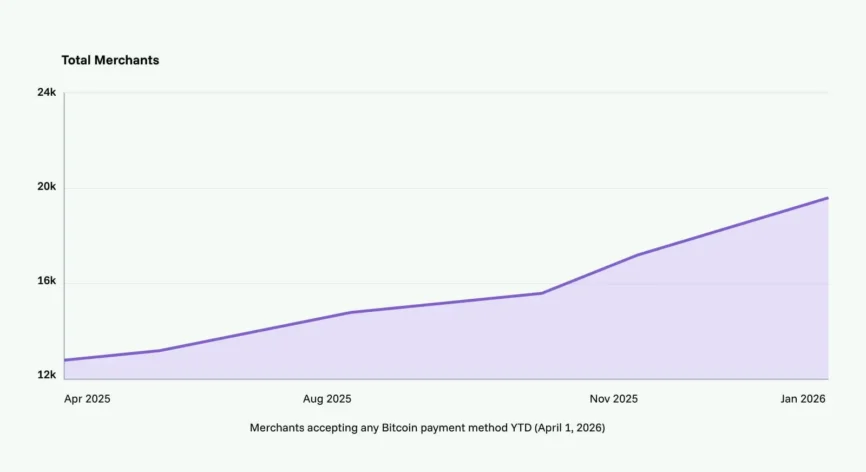
With certainty, this means merchant adoption has moved beyond the experimental stage.
Survey data from PayPal and NCA points in the same direction:
- Nearly 4 in 10 U.S. merchants in the sampled sectors already accept digital assets.
- 50% of businesses above $500 million in annual revenue already accept crypto.
Where crypto adoption is growing fastest
The United States remains one of the most visible markets for crypto payments, both because of merchant activity and consumer ownership. Triple-A estimated more than 46.8 million U.S. crypto owners in 2023, while Chainalysis ranked the United States second in its 2025 Global Adoption Index.
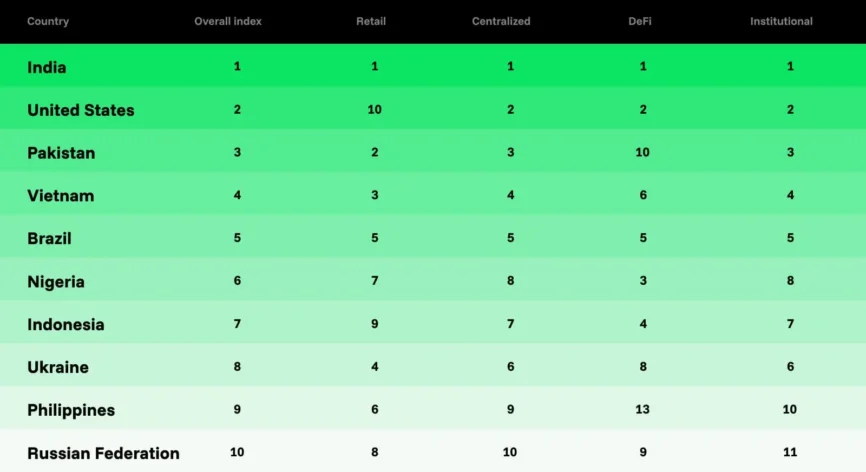
Asia is also a major driver of crypto adoption. Chainalysis ranked India first globally in 2025, followed by Pakistan and Vietnam, with Brazil, Nigeria, Indonesia, and the Philippines also in the top 10.
Strong ownership and usage tend to create more demand for crypto-enabled checkout, especially in mobile-first and cross-border markets. Online-first businesses are leading the way. They face fewer point-of-sale constraints, serve international users more often, and benefit more directly from borderless digital payments.
Types of businesses that accept crypto payments
The most common types of businesses that accept crypto payments are usually digital, global, or exposed to higher traditional payment costs.
They include:
- E-commerce stores and online retailers.
- SaaS companies and digital service providers.
- Travel and hospitality businesses.
- Gaming and digital goods platforms.
- Luxury and specialty merchants.
- Freelancers, agencies, and B2B service firms.
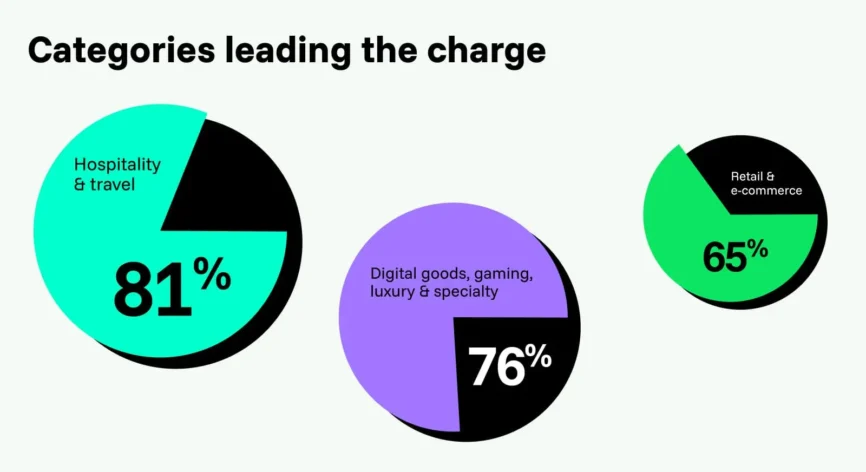
Data from NCA shows the strongest sector momentum in hospitality and travel, digital goods, gaming, luxury and specialty, plus retail and e-commerce.
Examples of businesses that accept crypto
The list changes over time, but crypto acceptance is now visible across tech, travel, retail, food, and online services. Public merchant directories and crypto payment providers show active acceptance across:
- Online electronics and tech retailers, such as Newegg and Namecheap.
- Travel booking platforms and hospitality services, such as Travala.
- VPNs, hosting providers, and digital subscriptions, such as NordVPN, Hostinger, and Namecheap.
- Luxury and specialty retailers, such as Farfetch.
- Agencies, contractors, and exporters using wallet-based invoicing through providers such as CryptoProcessing.
Rather than focusing only on a few famous brands, it is more useful to note the pattern. A large share of crypto commerce now happens through payment gateways, wallet links, hosted checkout pages, and stablecoin invoices. That means many businesses that accept crypto payments do so quietly, without promoting it as their main brand story.
Merchant adoption is looking more and more like a payment decision. Businesses are adding crypto because it helps them reach international customers, settle faster, and expand payment choice without rebuilding the whole checkout experience.

Why businesses accept crypto payments
Businesses should accept crypto payments largely because of economics and reach. The main reasons are:
- Lower fees in some payment flows.
- Faster settlement than many cross-border banking routes.
- Access to global customers who already hold crypto.
- Reduced chargeback exposure on completed on-chain transfers.
- Better flexibility for digital payments and international invoicing.
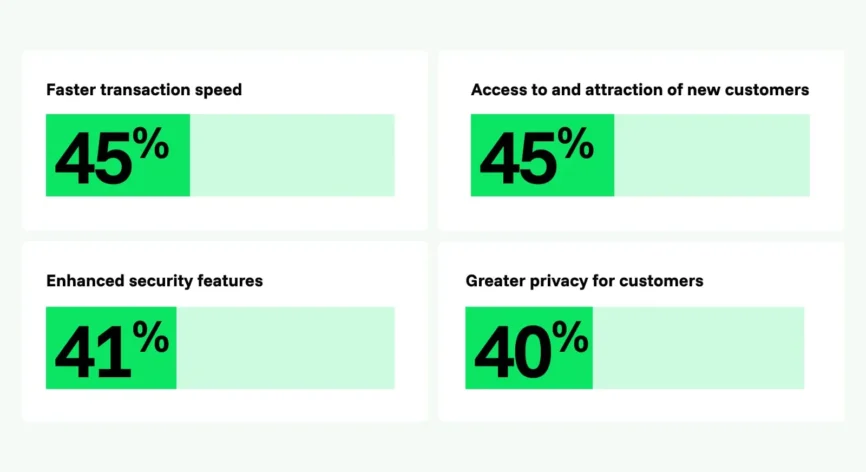
Stablecoins are a major part of this story. Payment volume grew 12% in 2025 and that stablecoins accounted for 40% of its total payment volume. That shows usage is moving beyond Bitcoin-only payments and toward more predictable business payment flows.
What is driving crypto payment adoption
The first driver is user growth: based on 2025 data, global crypto owners reached 700 million in April 2025.
The second driver is better tooling. Wallets, APIs, hosted checkout, plugins, and gateway products have made crypto checkout far easier to deploy than it was a few years ago. The PayPal-NCA research also found that 90% of merchants would be likely to try accepting crypto if setup were as easy as credit cards.
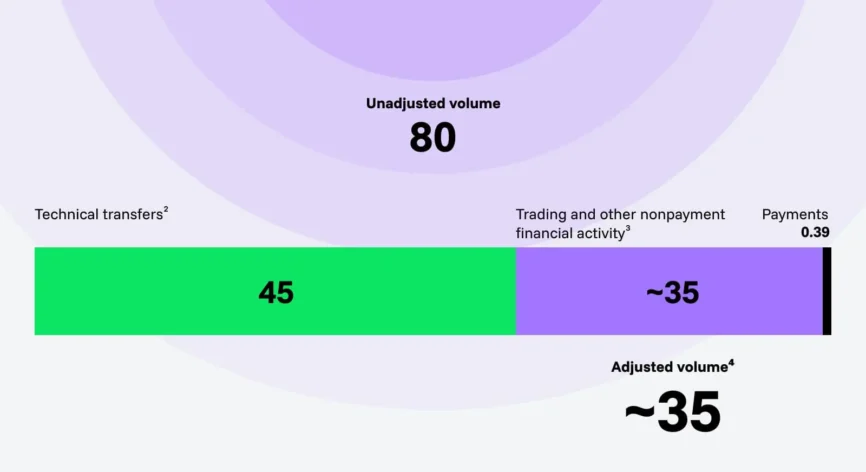
The third driver is stablecoin payments. They reduce volatility concerns and make crypto more usable for everyday business settlement, invoicing, and e-commerce payments. McKinsey noted in February 2026 that stablecoin activity has reached enormous scale, even if only part of that volume is tied to real-world payments.
What is slowing adoption
Crypto payment adoption is growing, but several constraints still slow wider rollout:
- Regulatory uncertainty in some markets.
- Volatility when merchants do not use stablecoins or auto-conversion.
- Limited awareness among traditional businesses.
- Extra UX friction for non-crypto users.
These issues are becoming easier to manage. Businesses can reduce complexity by using stablecoin payments, compliant providers, and gateway tools designed for business checkout.
Accepting crypto payments and sending crypto payouts with providers such as CryptoProcessing are making the merchant side much simpler than it used to be.
Future outlook
Over the next two to three years, the number of businesses that accept crypto is likely to keep rising. Public merchant listings are already in the tens of thousands, stablecoin usage continues to expand, and merchant surveys show strong interest from businesses that have not yet launched crypto checkout.
The most likely path to mainstream growth is a steady rollout of stablecoin payments, gateway-based checkouts, and crypto-enabled global payments built into normal ecommerce flows.
A merchant does not need to go all in. It can start with a gateway, support a few assets, and add crypto as one more payment option alongside cards and bank methods through CryptoProcessing.
FAQ – businesses that accept crypto
How many businesses accept crypto today?
A conservative answer is tens of thousands globally. BTC Map alone listed 23,051 Bitcoin-accepting merchants on April 1, 2026, and the real total is higher because many crypto-enabled merchants are not captured in one public directory.
Which companies accept bitcoin?
Businesses accepting Bitcoin span online retail, travel, digital services, gaming, luxury retail, and B2B services. The list changes often, and many merchants use payment gateways rather than advertising direct Bitcoin acceptance publicly.
What industries use crypto payments the most?
E-commerce, SaaS, travel, gaming, fintech, and cross-border service businesses are among the most active sectors. U.S. merchant survey data points especially to hospitality and travel, digital goods and gaming, luxury and specialty, plus retail and e-commerce.
Is crypto widely accepted for payments?
It is not yet universal, but adoption is now meaningful. Merchant directories show tens of thousands of active listings, and U.S. survey data suggests acceptance is becoming common in several business segments.
Will crypto payments become mainstream?
Merchant expectations suggest yes. In the PayPal-NCA survey, 84% of merchants said crypto payments will become common within five years.