

Crypto transactions usually fail for one of three reasons: network conditions, user error, or technical issues in the wallet or smart contract. A blockchain transaction can stay pending because the fee is too low, get dropped because it was never picked up by the network, or fail after execution because the contract call reverted.
On Ethereum, transaction receipts explicitly mark success or failure with a status field, while Bitcoin transactions can remain stuck in the mempool when fees are too low for current demand.
For users, this can mean delayed transfers, confusion over balances, or concern that funds are lost. For businesses, a failed crypto transaction can interrupt checkout, create support tickets, and reduce conversion. This guide explains the most common causes, what a failed or pending transaction actually means, and how to reduce the risk.
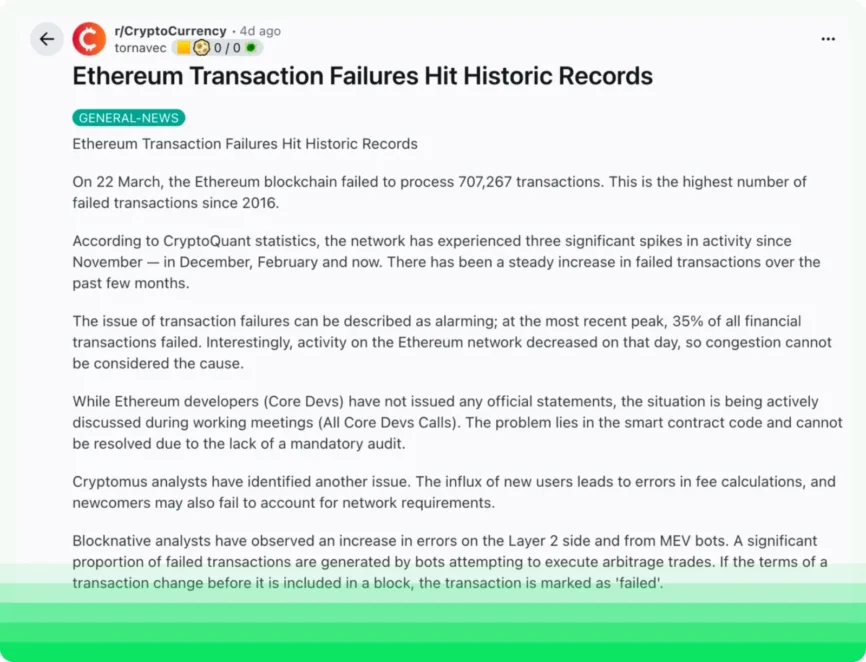
What is a failed crypto transaction
A failed crypto transaction is one that does not complete successfully on the network. That can mean different things depending on the chain and the transaction status.
The main statuses are:
- Pending transaction: broadcast, but not yet confirmed
- Stuck transaction: pending for an unusually long time, often due to low fees
- Dropped transaction: removed from active propagation and not included on-chain
- Failed transaction: included on-chain, but execution did not succeed
- Replaced transaction: superseded by another transaction using the same nonce and a higher fee
On Ethereum, a transaction can be “dropped and replaced” when a new transaction from the same account with the same nonce is accepted instead. Etherscan documents this status directly.
Most crypto payment failures usually come down to fee settings, network selection, or transaction logic. With the right payment flow, most of them are preventable.

Most common reasons crypto transactions fail
Insufficient network fees
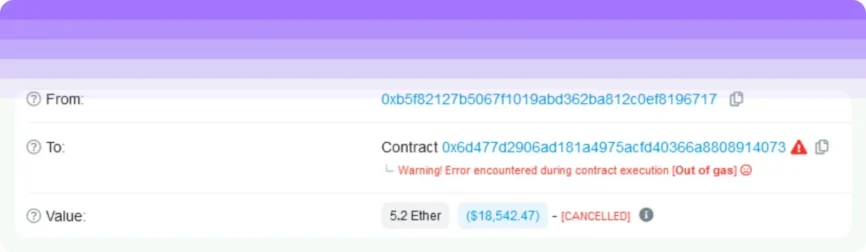
This is one of the most common causes. On Ethereum, gas fees change with network congestion, and a transaction with an uncompetitive fee can remain pending or fail if the execution runs out of gas. Ethereum’s official documentation explains that every transaction requires gas, and that gas fees are not fixed because they change with network demand.
On Bitcoin, a low-fee transaction may sit in the mempool until it is eventually confirmed, replaced, or dropped. Mempool.space and Tatum both describe fee-bumping and Replace-by-Fee as ways to deal with stuck transactions.
Network congestion
When block space is in high demand, transactions compete for confirmation. This is why users often ask, ‘why is my crypto transaction pending?’ The answer is often congestion, especially on heavily used networks. Ethereum and Bitcoin both show this behavior in different ways.
Incorrect wallet address
If the destination wallet address is invalid, unsupported, or entered incorrectly, the transfer can fail or the funds can be sent somewhere unrecoverable. This is one of the most serious crypto transfer issues because blockchains do not have a built-in reversal process.
Smart contract errors
A transaction can be mined on-chain but still fail during execution. This often happens with DeFi interactions, token approvals, or contract calls that revert. Alchemy notes that Ethereum receipts use a status field, where 0x0 means failed and 0x1 means success. In practice, that usually indicates a smart contract error, insufficient gas for execution, or invalid contract conditions.
Node or provider issues
Wallet apps and providers rely on nodes and indexing systems. Temporary sync issues can make a transaction appear missing, pending, or incomplete even when the blockchain itself is functioning normally.
Wrong network selection
Sending an asset on the wrong blockchain is a major cause of payment failure. For example, sending a token over an unsupported network can result in uncredited or lost funds. Recovery is possible in some limited cases.
Crypto transaction failed but funds deducted
This usually happens in one of two ways:
- First, the wallet may temporarily show a lower balance while a transaction is pending or being replaced.
- Second, the transaction may have reached the chain, failed during execution, and still consumed some gas.
On Ethereum, failed contract execution can still use gas because network resources were consumed before the revert. By contrast, a dropped and replaced transaction that never executes is typically treated as though the original never happened, and Etherscan says the assets and gas from that dropped transaction are returned to the sender.
Recovery is harder when funds were sent to the wrong address or over an unsupported network. In those cases, recovery depends on whether the receiving platform supports that asset and chain combination.
How to fix a failed or stuck crypto transaction
Increase the fee
On Bitcoin, Replace-by-Fee can help you rebroadcast a stuck transaction with a higher fee. If RBF is enabled, the transaction can simply be replaced with a higher-fee version.
On Ethereum, wallets often offer “speed up” options that submit a replacement transaction with the same nonce and higher gas settings. Etherscan explains that this is one reason transactions end up marked as dropped and replaced.
Cancel or resend
Some wallets allow you to replace a pending transaction with another transaction using the same nonce. This can either cancel the original or resend it with new settings.
Wait for confirmation
Sometimes the correct fix is patience. A pending transaction may clear once congestion eases and fee conditions improve. Coinbase notes that during periods of heavy network usage, transactions can simply take longer to complete.
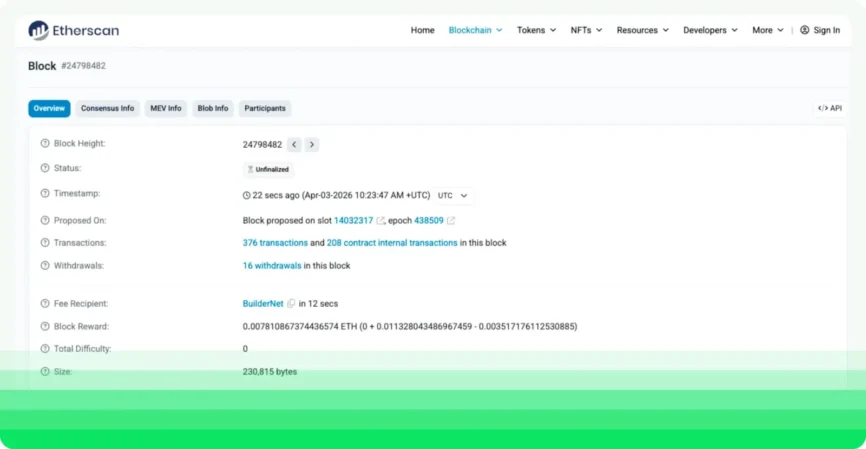
Check the transaction on an explorer
Use the transaction hash on a blockchain explorer to verify:
- Current transaction status
- Number of confirmations
- Whether it was dropped or replaced
- Whether a contract call reverted
This is the fastest way to distinguish a true crypto transaction not confirmed case from a wallet display issue.
How to prevent crypto transaction failures
A few habits prevent most issues:
- Double-check the wallet address
- Use the correct network and token standard
- Set appropriate fees
- Use reliable wallets and providers
- Test with a small amount first
- Use business-grade payment infrastructure where possible
For companies, tools for accepting crypto payments and using a crypto wallet for business can reduce manual errors and improve payment routing.
Business impact of failed crypto payments
A crypto payment failure is not simply a user inconvenience. It can mean:
- Lost revenue at checkout
- Customer frustration and abandoned payments
- Higher support workload
- More reconciliation time for finance teams
That is why secure payment infrastructure matters. Good routing, network validation, explorer checks, and automated status handling reduce failure rates and make crypto troubleshooting much easier.
Final thoughts
The answer to why crypto transactions fail is usually textbook. Fees may be too low, the network may be congested, the address or chain may be wrong, or the transaction may have failed during contract execution.
Most failures are preventable with the right fee settings, network checks, and payment tools. For businesses, reducing transaction failure is mostly a matter of using the right infrastructure and removing avoidable manual steps.
FAQ – crypto transactions not confirmed
Why is my crypto transaction pending for so long?
Usually because the fee is too low for current network conditions or the chain is congested. Bitcoin and Ethereum both prioritize transactions partly based on fee conditions.
Can a crypto transaction fail permanently?
Yes. A failed contract call, a wrong network deposit, or a transfer to an incorrect address can lead to permanent loss or non-recovery in some cases.
Will I get my funds back if a transaction fails?
Sometimes. Dropped or replaced transactions may effectively return funds to the sender, while failed smart contract executions may still consume gas. Unsupported-network mistakes may or may not be recoverable.
How long does a transaction take to confirm?
It depends on the network, congestion level, and fee settings. Some complete in minutes, while others can remain pending much longer during busy periods.
What happens if I send crypto to the wrong address?
In many cases, recovery is not possible. If the address or network is unsupported, the funds may be lost unless the receiving platform offers a specific recovery process.