
Accepting Bitcoin, USDC or another digital asset introduces a new payment method at checkout while finance teams still need familiar records such as an invoice, a consistent USD valuation, traceable settlement data and entries that reconcile with the ledger.
Effective crypto accounting essentially depends on three things:
- Connecting the invoice with the blockchain transaction;
- Processor settlement;
- Accounting entry.
It is important, however, to be aware of common errors such as booking processor payouts as revenue, changing valuation methods between transactions, overlooking fees and leaving wallet activity outside the month-end close.
Quick answer
Record the sale under the company’s usual revenue-recognition policy. Capture the crypto amount, USD fair market value, timestamp, wallet reference and transaction hash. Record the asset received or processor receivable separately from revenue, account for fees and settlement, then reconcile the invoice, blockchain record, processor report and general ledger.
The crypto payment accounting lifecycle
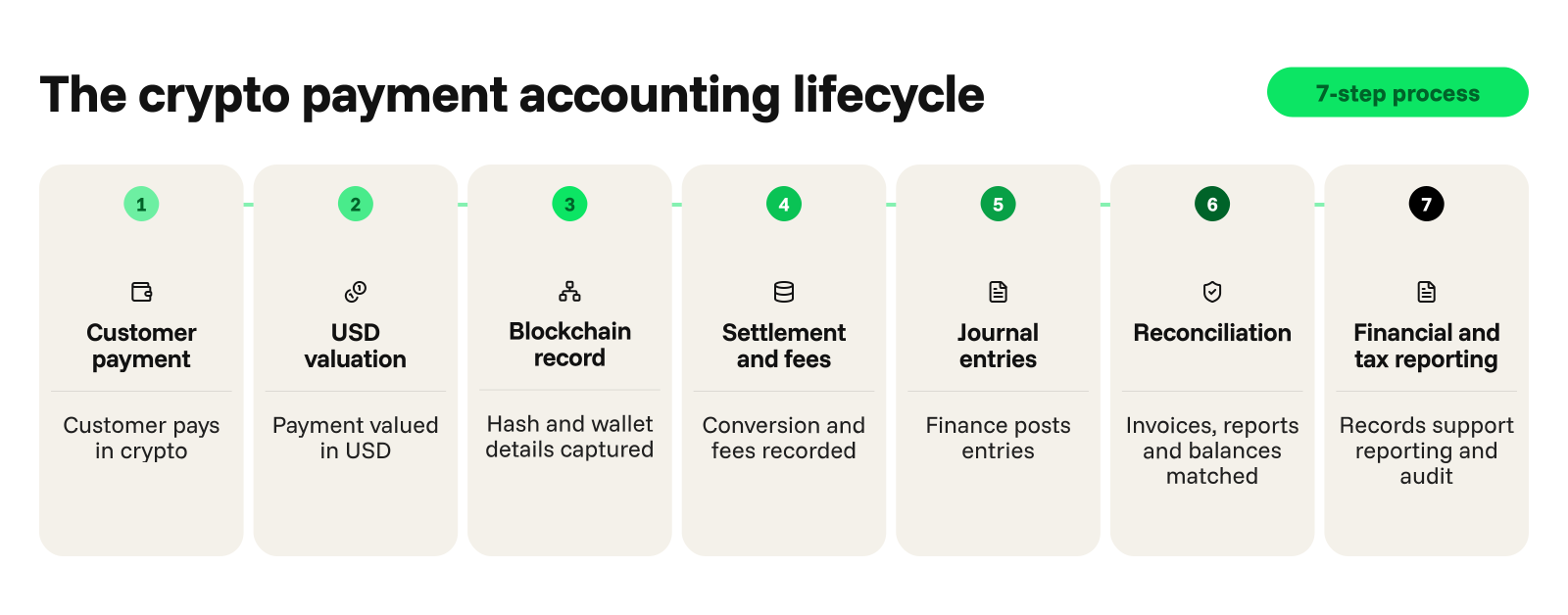
Crypto payment accounting starts with the customer transaction and continues through settlement, reconciliation and financial reporting.
- When a customer pays an invoice in crypto, the business records the amount received alongside its USD value at the relevant time.
- The payment is then matched with the invoice and blockchain record, including the transaction hash and wallet details.
- From there, finance records any conversion, settlement and processing fees before posting the relevant journal entries.
- These records are then reconciled with processor reports, wallet balances and the general ledger during the accounting close.
The same transaction data also supports financial statements and tax reporting, giving finance teams a complete record from customer payment through to final settlement.
What happens when a business receives cryptocurrency?
Suppose a merchant issues a $1,000 invoice and receives Bitcoin.
Once the business has earned the revenue under its usual accounting policy, it records the sale alongside the asset or receivable created by the payment.
For qualifying assets such as Bitcoin, FASB ASU 2023-08 requires subsequent measurement at fair value, with changes recognised in net income. The rule applies for fiscal years beginning after December 15, 2024.
The journal entry depends on the timing of the sale and payment. Where revenue was already booked when the invoice was issued, receipt of crypto clears accounts receivable. Where payment and revenue recognition occur together, the business can debit the crypto asset or processor receivable and credit revenue.
Fees, conversion results and later gains or losses receive their own accounting treatment.
Bitcoin vs stablecoins in accounting
| Bitcoin | Stablecoins | |
|---|---|---|
| Valuation | Market price can move materially | Designed to track a reference asset |
| FASB treatment | Generally falls within ASU 2023-08 | Depends on the token and its terms |
| Treasury | Creates market exposure when retained | Often used for settlement |
| Reconciliation | Price changes can create valuation differences | Peg stability can make matching easier |
Stablecoins require an asset-by-asset accounting assessment. Some redeemable stablecoins can fall outside ASC 350-60 where holders have enforceable claims relating to underlying assets.
Finance teams should document the accounting treatment applied to USDC, USDT and other stablecoins held by the business.
Accounting workflows for five merchant scenarios
| Finance treatment | |
|---|---|
| Bitcoin payment | Record the sale, BTC units and USD value, then account for later fair-value changes where applicable. |
| USDC payment | Record the sale and receipt, then apply the company’s documented stablecoin classification policy. |
| Automatic USD settlement | Match the payment with the invoice and reconcile conversion, fees and bank settlement. |
| Crypto retained | Maintain wallet, valuation, tax and treasury records through each accounting close. |
| Partial crypto refund | Link the refund with the original sale and retain the outgoing transaction hash and valuation. |
Regarding California sales tax, CDTFA treats barter and exchanges as sales or purchases, with fair market value generally used where the underlying transaction is taxable.
Crypto payments should therefore remain connected with the company’s usual sales-tax records.
Reconciliation is where finance teams can lose time
Reconciliation means checking that every crypto payment recorded at checkout matches what actually took place technically across the processor, blockchain and company accounts.
Finance teams should be able to follow each payment from the original ERP invoice to the processor record, then to the blockchain transaction and final settlement in a merchant wallet or bank account. The same payment should also appear correctly in the general ledger.
A shared invoice ID helps connect the customer payment with the processor report. The transaction hash provides a record of the blockchain transfer, while settlement reports show how much was converted, which fees were charged and how much reached the business.
Common crypto accounting mistakes
Several recurring issues create extra work during reconciliation and audit preparation:
- Recording settlement proceeds as fresh revenue;
- Treating every stablecoin as cash;
- Leaving network and processor fees out of the ledger;
- Using different exchange-rate sources across transactions;
- Treating internal wallet transfers as income;
- Losing transaction hashes or invoice references;
- Leaving wallet balances unreconciled at month-end.
A written accounting policy helps finance teams apply the same treatment across payments, wallets and reporting periods.
Building an audit-ready crypto accounting process
The accounting policy should define the approved price source, valuation timestamp, chart-of-accounts treatment and settlement method. It should also assign responsibility for wallet reconciliation and month-end review.
Wallet access, treasury transfers and refunds should follow documented approval controls.
The IRS asks taxpayers to retain records covering digital asset receipts, disposals and USD fair market values. California generally follows the Internal Revenue Code with state adjustments, so businesses should review relevant FTB requirements with their tax adviser.
Crypto accounting becomes easier when every payment reaches finance with the records the team already uses, including an invoice reference, timestamp, USD value, fee breakdown and settlement record. The transaction hash adds another verifiable record for reconciliation and audit.

Crypto accounting checklist
Finance teams should retain the following for each payment.
Invoice reference;
Digital asset and units received;
Transaction timestamp;
Approved exchange rate;
Fair market value evidence;
Wallet or processor record;
Transaction hash;
Network and processor fees;
Settlement report;
Journal entry;
Month-end reconciliation;
Tax and audit documentation.
Together, these records create an audit trail from customer payment through to the financial accounts.
How payment systems can simplify accounting
Crypto payment gateways such as CryptoProcessing can capture exchange rates, timestamps, wallet references, fees and settlement status when a payment occurs.
Moreover:
- Our crypto business account can support merchant wallet and treasury activity;
- Stablecoin payments give businesses access to assets such as USDC and USDT.
- Companies can connect payment data with internal finance systems through the Cryptoprocessing.com API;
- Lastly, mass crypto payouts can provide organised records for outbound crypto payments.
CryptoProcessing supplies transaction, payment and settlement data that finance teams can use within their existing accounting processes. Revenue treatment, asset classification and tax reporting remain responsibilities of the business and its professional advisers.
Final thoughts
Crypto payment accounting becomes manageable when every transaction follows a consistent path from invoice through payment, settlement, ledger entry and tax reporting.
Consistent valuation methods, complete transaction records and regular reconciliation reduce errors while giving finance teams better control over the month-end close and audit preparation.
FAQ – crypto accounting california
How do businesses account for crypto payments?
Record the sale, document the digital asset in USD, account for relevant fees and later asset movements, and reconcile the records with the ledger.
Should revenue be recorded in crypto or USD?
US accounting and tax records generally use dollar measurement for financial and tax reporting.
What exchange rate should be used?
Use a documented and consistently applied source suited to the relevant accounting or tax requirement.
Are stablecoins easier to account for?
Their price stability can make payment matching and settlement reconciliation easier. Accounting classification depends on the characteristics of each token.
How are blockchain fees recorded?
Record network fees separately according to the nature of the transaction and the company’s accounting policy.
How should refunds be accounted for?
Link the refund with the original sale and retain the outgoing asset value, timestamp and transaction hash.
What records should finance teams retain?
Keep invoice data, asset units, timestamps, USD valuations, wallet records, transaction hashes, fees, settlement records and accounting entries.
How often should wallets be reconciled?
High-volume merchants may reconcile wallet activity daily, supported by a complete reconciliation during the month-end close.
What creates the greatest crypto accounting risk?
Weak links between the sale, blockchain payment, settlement and ledger entry can create reconciliation errors and incomplete audit records.
How can payment systems automate accounting?
They can capture transaction data at source and feed consistent payment, valuation and settlement records into finance and ERP systems.