
Crypto payments do not support traditional card-style chargebacks, but disputes still happen. The core difference is that blockchain payments are generally irreversible once confirmed, so the dispute usually shifts from a network reversal process to a merchant-side refund, review, or support workflow.
Bitcoin transactions are irreversible and immune to fraudulent chargebacks, while a sent Ethereum transaction is irreversible unless the recipient voluntarily sends funds back.
For businesses, this is worth noting. Customers can still claim non-delivery, payment error, wrong amount, or incorrect network use. In other words, crypto removes one part of card dispute risk, but it does not remove customer complaints, fraud attempts, or operational mistakes.
This guide explains the main types of crypto payment disputes, why they happen, and how to manage them without relying on chargeback systems.
Do crypto payments have chargebacks?
Not in the traditional card sense. Card networks run formal dispute and chargeback procedures between issuers, acquirers, processors, and merchants. With Mastercard, for example, there is a structured multi-stage process with deadlines, evidence handling, and arbitration steps. Crypto payments do not have that same built-in reversal framework at the blockchain level.
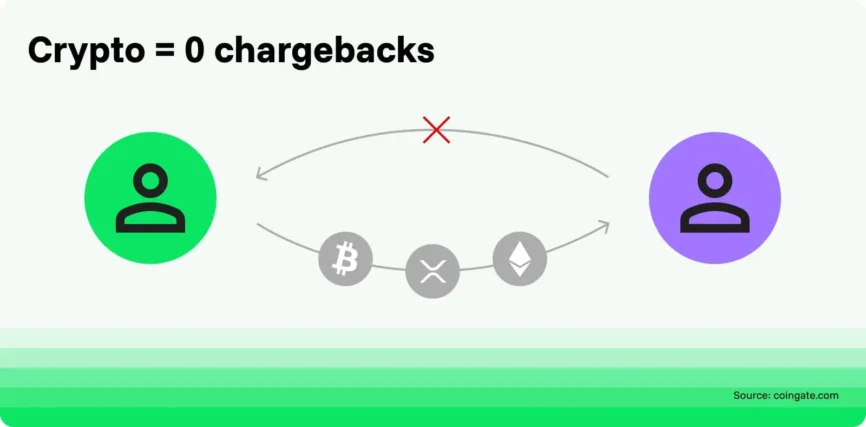
What crypto does have is irreversibility after confirmation, plus whatever dispute resolution policy the merchant or service provider chooses to offer. That is why crypto chargebacks are not really chargebacks at all. They are usually refund requests, support claims, fraud reviews, or transaction troubleshooting handled off-chain by the business.
Crypto removes traditional chargeback exposure, but it raises the importance of clear refund rules, payment validation, and fast support. The dispute simply just changes form.

What are crypto payment disputes?
Crypto payment disputes are explained simply as disagreements between a customer and a merchant after a crypto payment has been made, attempted, or claimed.
Common examples include:
- The merchant says payment was not received
- The customer says goods or services were not delivered
- The wrong amount was sent
- The customer used the wrong network or token
- A fraud or social engineering claim appears after payment
This is different from a refund request. A refund is a merchant-approved return of funds. A dispute is a disagreement about what happened. A fraud claim is narrower and usually focuses on deception, impersonation, or unauthorized behavior.

Common types of crypto payment disputes
Payment not received by merchant
This often comes down to delays, unsupported networks, wrong addresses, or incomplete blockchain confirmation. A transaction may also appear sent in a wallet before it has been fully confirmed on-chain. Bitcoin.org notes that unconfirmed transactions are not yet secure and can take much longer to get the first confirmation if the fee is too low.
Customer claims non-delivery
The blockchain may show a successful payment, but the customer may still claim that the product, service, or account credit never arrived. This is the closest thing to a classic post-payment commercial dispute.
Incorrect transaction amount
This can happen when the customer sends too little, too much, or sends after a quote expires. Stablecoins help reduce price movement risk, but merchants still need a clear rule for how much overpayment or underpayment is acceptable.
Wrong network or token
This is one of the most common sources of crypto transaction disputes. A customer may send an asset over an incompatible chain, or send the wrong token to an address that supports only a different standard.
Fraud and social engineering
Some cases are not true merchant errors at all. Customers may be tricked by fake invoices, phishing, or address replacement malware, then later blame the merchant. Ethereum’s security guidance highlights scam and address-risk issues as a major user vulnerability.
Why disputes happen in crypto payments
Most disputes happen because crypto payments still place more responsibility on the user and merchant than card payments do.
Customers may not fully understand token standards, confirmations, or network selection. Merchants may still rely on manual checkout flows, copied addresses, or unclear invoice design.
When there is no standardized card-style reversal mechanism, even a small payment mistake turns into a support case.
Regulatory expectations are also pushing providers toward better complaint handling. Under MiCA-related rules in the EU, crypto-asset service providers are expected to maintain complaint-handling procedures, and ESMA publishes complaint-handling references for national authorities.
That does not create blockchain chargebacks, but it does reinforce the need for structured dispute resolution around crypto services.
How businesses can manage crypto payment disputes
Implement clear payment instructions
Show the exact network, token, wallet address, and time-limited quote clearly. Use QR codes and automated invoices where possible. This reduces manual entry mistakes and wrong-network payments.
Use real-time payment tracking
Track the transaction hash, monitor confirmation status, and only mark an order as paid once it meets the required number of confirmations. Bitcoin.org explicitly warns that unconfirmed transactions are not secure.
Define a clear refund policy
A strong crypto refund policy should answer:
- Whether refunds are issued in crypto, fiat, or either
- Which exchange rate or reference price is used
- Who pays network fees on the refund
- What happens if the customer sent the wrong amount or wrong asset
Use a crypto payment gateway
A payment gateway can automate address generation, transaction tracking, network validation, and reporting. That lowers manual error rates and creates a clearer audit trail for dispute resolution. Businesses accepting crypto payments often reduce friction most when removing manual wallet handling.
Build support workflows
Support teams should have a standard review flow:
- Request the transaction hash
- Verify the network and destination address
- Check confirmations and amount received
- Confirm whether the invoice expired
- Decide whether the issue is a payment error, delivery issue, or refund case
For operations handling larger balances or multiple team members, a crypto wallet for business also helps with transaction tracking and internal controls.
Preventing disputes in crypto payments
The best prevention tools are simple:
- Use stablecoins where possible
- Automate checkout and invoicing
- Validate addresses and supported networks
- Educate users before payment
- Avoid manual copy-paste flows
- Use reliable payment infrastructure
These steps reduce merchant risk, improve payment verification, and make the overall payment flow easier for both sides.
Crypto vs traditional payment disputes
Card disputes and chargeback crypto payments are very different risk models:
- Card systems give consumers a built-in reversal path, but that creates operational cost for merchants through chargeback fees, evidence handling, and fraud exposure.
- Crypto removes that formal reversal channel at the network level, which lowers classic chargeback exposure but shifts the burden toward prevention, refund policy, and good payment infrastructure.
Ultimately, crypto can reduce some fraud vectors, but businesses still need a strong process for customer claims and transaction errors.
The business impact of dispute management
Good dispute handling can strengthen trust, reduce unnecessary refunds, lower operational cost, and improve conversion rates by making crypto checkout feel safer and more understandable.
For merchants, the goal is to create a controlled and transparent post-payment process around blockchain payments.
That is where digital currency processing providers such as CryptoProcessing become essential.
Final thoughts
Crypto eliminates traditional chargebacks, but it does not eliminate disputes.
Customers can still send the wrong amount, use the wrong network, claim non-delivery, or request a refund after a payment problem.
However, most of these cases are manageable with clear instructions, automated payment tracking, a defined refund process, and reliable infrastructure.
Businesses that focus on clarity and automation will usually prevent most crypto payment disputes before they happen.
FAQ – crypto payment disputes explained
Can crypto transactions be reversed?
Usually no. Confirmed blockchain transactions are generally irreversible unless the recipient voluntarily returns the funds.
How do businesses handle refunds in crypto?
Usually through a merchant-defined refund process. The business decides whether refunds are sent in crypto or fiat, which price reference is used, and how network fees are handled.
What happens if a customer sends funds to the wrong address?
Recovery may be impossible. Ethereum’s official safety guidance says wrong-address transfers are generally not retrievable unless the address owner sends them back.
Are crypto payments safer than card payments?
They use a different risk model. Crypto removes card-style chargebacks, but users and merchants need stronger controls around address accuracy, support, and refund handling.
How can I reduce crypto payment disputes?
Use stablecoins, automated invoices, clear network instructions, real-time transaction tracking, and a clear refund policy. A business-grade payment stack is usually the most effective way to lower dispute volume.