

B2B payments (whether we’re talking supplier settlements, cross-border transfers, or corporate payroll) are the arteries of global commerce. However, despite their critical role, traditional payment systems are stuck in the past.
Delays are standard. Clearing a single international transaction can take up to 5 business days due to time zones, bank processing windows, and national holidays. For global companies, this lag hampers agility.
Fees add up fast. Every intermediary bank tacks on its own charge. Add currency conversion markups, and the cost of a single payment can quietly balloon, without the transparency to match.
Visibility? Practically nonexistent. Once a wire is sent, businesses often lose sight of its status until it lands (if it does, indeed, land). That lack of traceability makes reconciliation harder and accounting slower
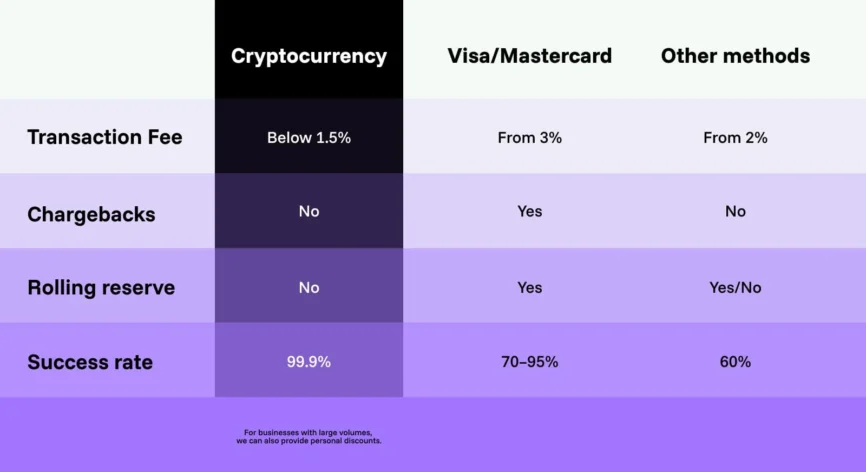
In this environment, cryptocurrency B2B payments are becoming a compelling alternative.
By using blockchain payments and stablecoin remittances, businesses gain near-instant settlement, lower costs, and real-time transparency, often with no middlemen involved.
Let’s talk about that.
Cryptocurrency in b2b payments – what’s going on?
More businesses are shifting to B2B crypto payments (especially stablecoins) as a more efficient, cost-effective solution.
Here’s why it works:
- Low fees: Stablecoin transactions on blockchains like Solana or Tron regularly cost less than $1. Compare that to SWIFT or wire fees ranging from $30 to $100, and the cost advantage becomes clear.
- Fast and always-on: Blockchain-enabled payments settle within seconds and operate 24/7. There are no cut-off times or weekend blackouts — just real-time, round-the-clock digital payments.
- No intermediaries: These crypto transfers move peer-to-peer, skipping the slow, layered network of correspondent banks. Each transaction is logged on-chain, giving businesses full transparency, auditability, and peace of mind.
- A massive opportunity: According to Coinbase, stablecoin-powered international transactions for B2B use represent a $40 trillion market. As of now, 75% of global business payments fall into this category.
In short, the future of B2B payments is beginning to look borderless, instant, and programmable.
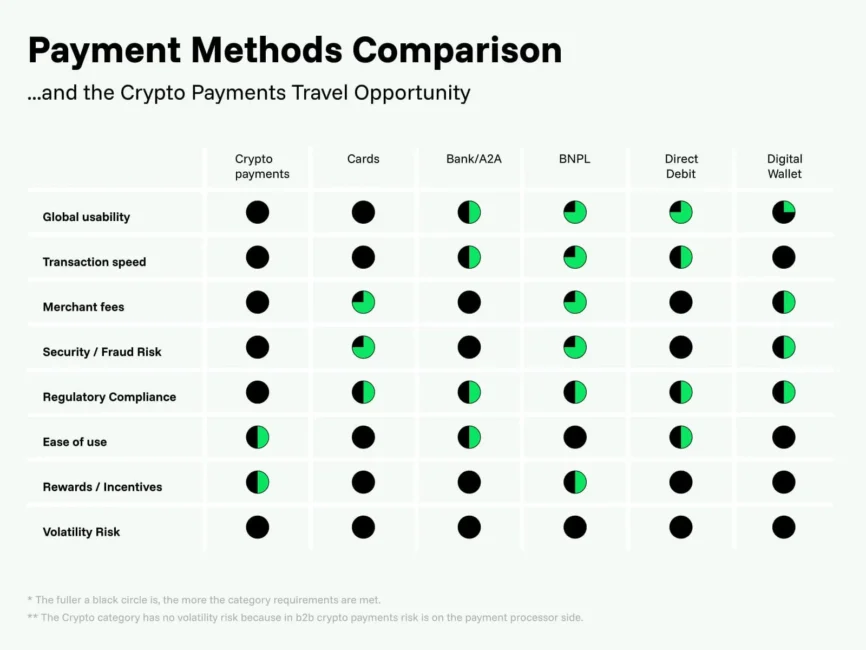
What’s fueling b2b crypto payment adoption?
Stablecoins and tokenized deposits
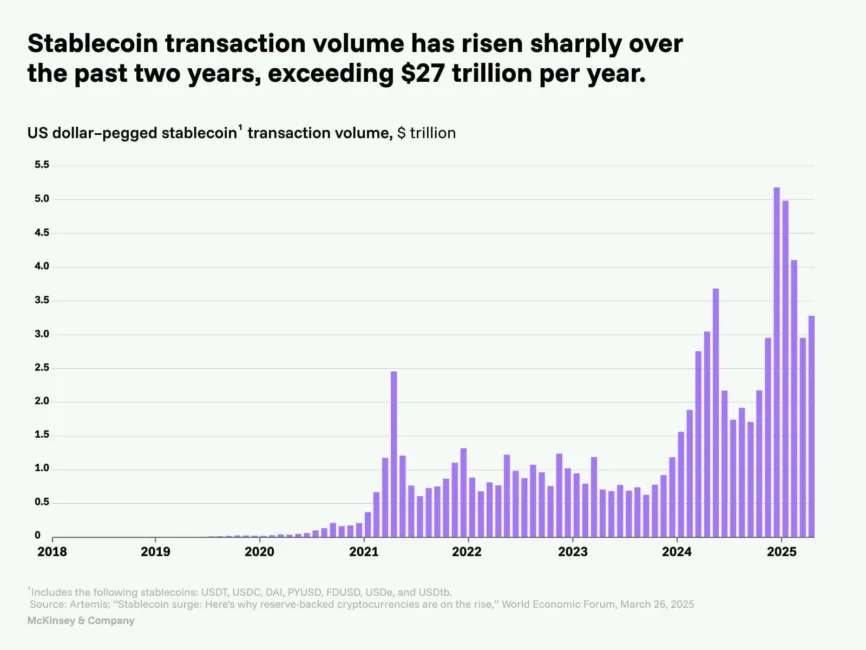
Stablecoins are accelerating into the mainstream. In mid-2025, their total market value sits at $250 billion, with forecasts eyeing $400 billion by year-end and a projected $2 trillion by 2028. This signals increasing confidence in their role in digital payments and liquidity management.
Much of this momentum is regulatory. The U.S. GENIUS Act, for example, now provides a federal framework for payment stablecoins, aligning state and federal oversight.
Corporate infrastructure moves
Major players are integrating cryptocurrency B2B payments directly into their ecosystems. PayPal’s “Pay with Crypto” feature lets merchants accept over 100 tokens and settle instantly in fiat or PYUSD, its own stablecoin. This allows global payouts with just 0.99% in fees – far more efficient than most banks.
Meanwhile, Mastercard has folded stablecoins like USDC, FIUSD, and PYUSD into its multi-token network, bringing blockchain payments to over 150 million merchants.
Regulation is catching up
Regulatory clarity is transforming what was once a risky experiment into a legitimate alternative. The GENIUS Act embeds consumer protection and defines how stablecoin remittances operate across states. In the UK, the FCA is scaling its crypto strategy – recruiting seasoned execs from banking to oversee compliance and innovation.
Clear rules help reduce legal ambiguity for CFOs and compliance officers. For many, it’s the green light they’ve been waiting for to explore crypto adoption in enterprise settings.
Tech integration and smart automation
The most compelling shift may be technical. With smart contracts, crypto payments can now be conditional, automated, and fully programmable. That means supplier payments triggered upon delivery, or payroll executed automatically based on contract terms.
Even better, these systems are starting to plug directly into enterprise software. From ERP suites to treasury dashboards, blockchain payments can now integrate into workflows – bringing greater efficiency and clarity to financial operations, KYC/AML tracking, and even fraud prevention.
Real‑world use cases of cryptocurrency b2b payments
The shift toward cryptocurrency B2B payments is well underway across sectors and use cases.
Cross-border supplier payments are one of the clearest wins. Instead of routing funds through multiple banks, companies now use stablecoin remittances to settle invoices directly with overseas vendors. It’s faster, cheaper, and requires no intermediaries – removing the bottlenecks that slow down international transactions.
Payroll and liquidity management are also evolving. Some firms now pay contractors or remote teams in crypto, especially where access to traditional banking is limited. Others are deploying smart contracts for automated milestone-based payouts – commonly seen in sectors like construction, where verifying project stages on-chain can trigger payments in real time.
Major platforms are also on board. From fintech services to enterprise payments, stablecoins are gaining ground. PayPal merchants, Mastercard users, and corporate clients of Coinbase are all embracing blockchain payments as part of their global B2B operations.
We’re seeing stablecoins move from pilot programs into core infrastructure. For many companies, it’s about using programmable, low-cost settlement infra that integrates directly into treasury, ERP, and cross-border payment systems.

Crypto is helping companies modernize their approach to business payments by cutting costs, increasing transparency, and offering greater control.
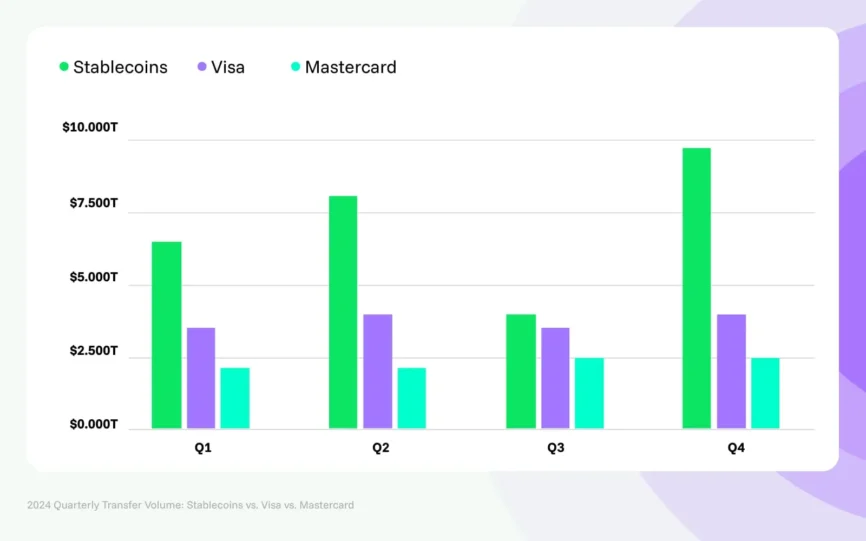
A glimpse into the future of B2B payments
As infrastructure scales and regulations solidify, crypto-enabled solutions will go from optional to expected in global B2B finance.
- Mainstream adoption is accelerating. More businesses are tapping into the benefits of digital payments via stablecoins, tokenized deposits, and programmable rails. These solutions offer a level of efficiency and reliability that traditional systems are struggling to match.
- Smart workflows are coming. As smart contracts evolve, expect to see automated invoicing, compliance processes, and treasury actions become standard. This programmability will help reduce errors, eliminate delays, and streamline operations across supply chains.
- CBDCs and tokenized bank money are beginning to emerge. Projects like mBridge are exploring real-time cross-border transfers with central bank backing, blending traditional finance with blockchain-level programmability and security.
- The market is exploding. Analysts project the B2B digital payments market will grow from $8 trillion in 2024 to $27.8 trillion by 2032. Technologies like blockchain and AI are driving this surge by enabling scalable, secure, and low-cost infrastructure.
This next phase is about building a better system for how businesses move money globally.
What’s in store? The future of b2b payments
So, it’s clear to us that the future of B2B payments is here – and it’s faster, cheaper, and smarter.
Businesses that adopt blockchain payments, stablecoins, and smart contract automation will gain a competitive edge through greater efficiency, transparency, and global reach.
Future of payments: Frequently Asked Questions
What stablecoins are best for B2B payments?
- USDC offers robust compliance, transparency, and multi-chain support — making it a top choice for regulated businesses.
- USDT has unmatched liquidity and global adoption, ideal for firms prioritizing reach, though it faces scrutiny over reserves.
- FIUSD and PYUSD are growing contenders, backed by major institutions, but still lag behind USDC and USDT in usage and network depth.
Is crypto legal for B2B cross-border transactions?
Can smart contracts automate enterprise invoicing?
Absolutely. Smart contracts can trigger payments based on delivery confirmations, integrate with ERP systems, and dramatically reduce reconciliation work. It’s a powerful tool for cutting manual processes and enabling programmable, reliable crypto transfers.