
In the typical gaming hardware model, a distributor pays for cabinets, terminals, boards, screens, bill validators, and spare parts. The supplier releases the stock only after the money has landed in their account. So, a late transfer can stall valuable equipment, absorb margins, and push future orders back.
The complexity of a global distribution network introduces extra risk. One order can connect a manufacturer in Europe, a distributor in Latin America, a casino operator in Africa, and banks in several countries.
Payment certainty becomes a part of the supply chain, where any delays echo throughout the network.
Why gaming hardware distribution depends on reliable cross-border payments
The market is global in nature and involves complex supply chains that span continents.
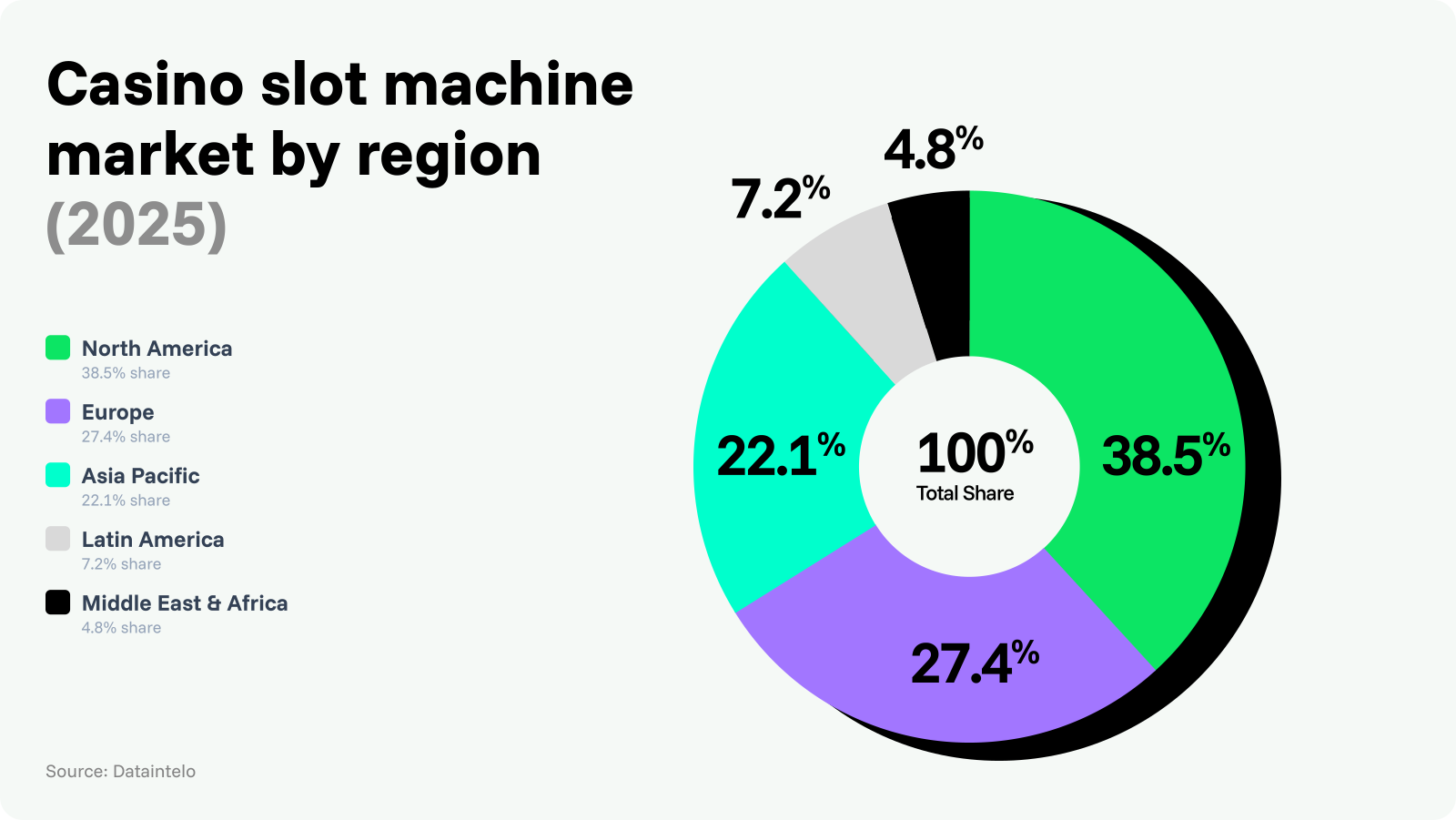
A single shipment can include hardware from one country, software licenses from another, and service contracts tied to local casino rules. Stock allocation often goes to the distributor that pays first, not the one that signed first.
High-value wholesale electronics further raise the stakes. A distributor can tie six or seven figures to one container, then wait for bank confirmation before the supplier releases goods. That delay affects inventory management, delivery dates, technician schedules, and customer confidence.
Reliable international supplier payments help distributors protect orders, lower cash pressure, and keep treasury working together with procurement. Poor certainty creates the opposite result: delayed stock and manual follow-up across banks and partners.
What are cross border payments in B2B distribution?
B2B cross border payments are payments sent from one business to another across national borders. In gaming hardware distribution, they cover cabinets, electronic gaming machines, screens, ticket printers, license fees, and support contracts or spare parts.
Traditional cross border business payments often move through correspondent banks. The distributor sends a bank instruction. A local bank screens the payment. One or more intermediary banks route funds. FX conversion takes place. The supplier bank credits the account.
The supplier team releases the shipment at the end of this entire chain once everything is confirmed.
Each handoff adds another status point, fee, and document request. In the case of cross border payments for businesses, the hard part typically comes down to proving to the supplier that the cleared value reached the right account in the right currency.
Key challenges in cross-border payments for gaming hardware distributors
Traditional cross-border payments involving local banks and payment systems typically suffer from:
- Payment delays: suppliers typically wait for final credit before stock release.
- FX conversions: a local currency debit can leave a USD or EUR invoice short.
- High fees: intermediary banks can charge fees along the payment path.
- Compliance stops: banks can pause transfers for extra source-of-funds checks.
- Low transparency: the payer sees a pending status without a clear end date.
- Failed transfers: reversed or returned payments can delay shipments even further.
- Manual reconciliation: invoice IDs, fees, and local accounts can make matching slow.
How cross border payments work in global hardware supply chains
A typical bank route for international supplier payments involves a distributor, local bank, intermediary bank, FX leg, and the supplier account. In practice, things can get even more complicated.
Each extra handoff creates a gap between the invoice and the confirmed receipt. That gap is where informal intermediaries appear. A local broker offers a faster route through local systems or crypto payments. An OTC desk uses someone’s personal digital wallet. A freight contact offers to settle locally against a separate balance.
These routes can feel practical, but they are difficult to audit and create extra risks for the finance team.
A controlled payment path should replace informal intermediaries, not imitate them. The payment record should show who paid, which invoice was paid, which asset or currency was moved, and which entity received value.
Why payment certainty matters
Settlement certainty means both sides can see the amount, currency, payer, reference, and status. For gaming hardware distributors, that view supports five business outcomes:
- Faster supplier confirmation and shipment release.
- Better inventory planning across open orders.
- Less treasury pressure from trapped receivables.
- Stronger trust with international vendors.
- Records for finance, auditors, and compliance teams.
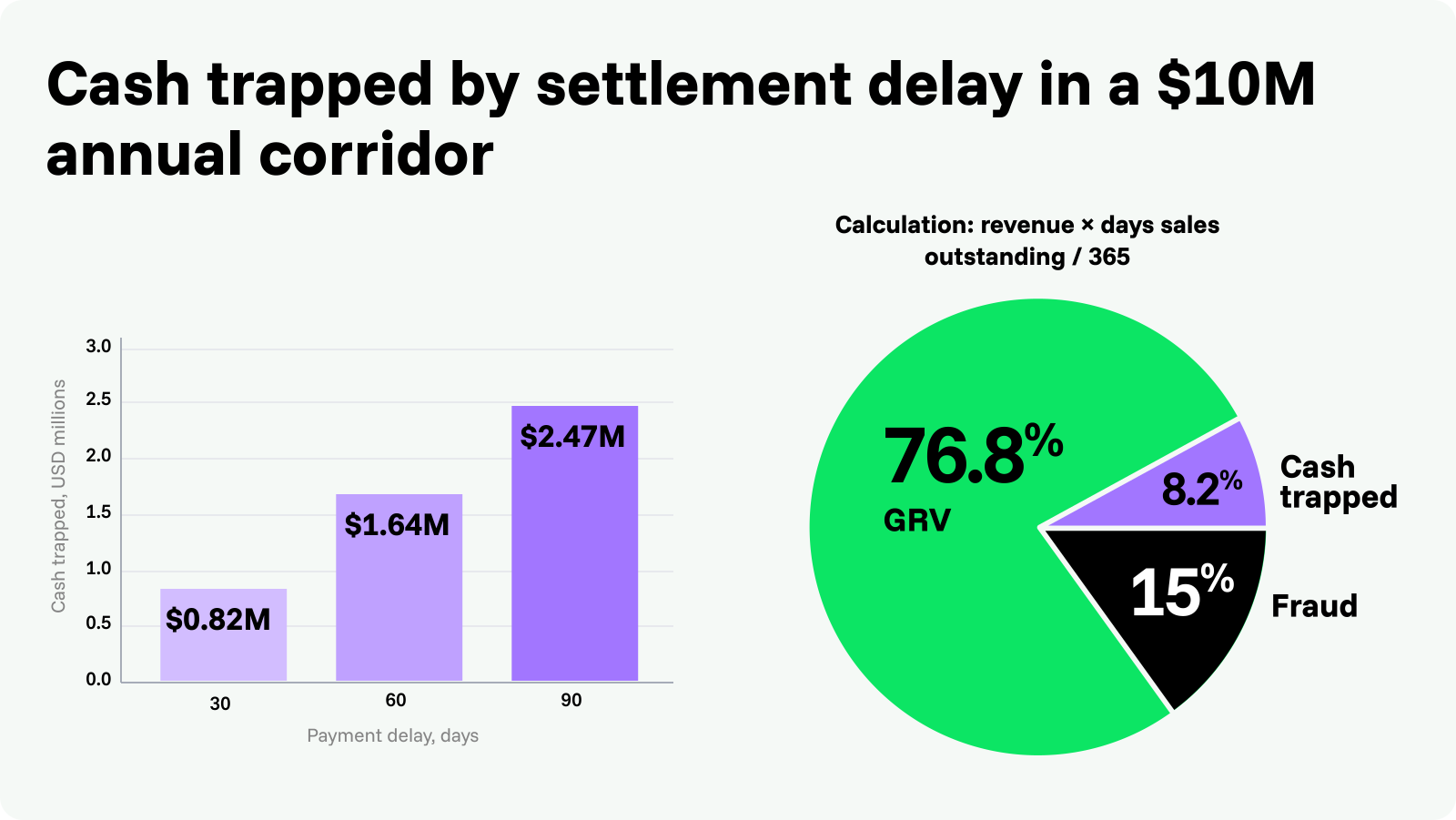
For a $10 million annual distributor corridor, every 30 days of payment delay traps about $0.82 million in receivables. A 90-day delay traps about $2.47 million. That cash sits outside procurement, stock planning, and margin management.
How blockchain infrastructure improves payment control
Cross border payments blockchain rails give both parties a shared record, which is an important starting point.
“Hardware distributors often think the payment problem starts at the bank. It starts earlier, at the point where the payment path becomes convoluted. A controlled stablecoin route gives the supplier a clear receipt, gives finance a clear record, and removes the need for side-channel intermediaries.”

Blockchain infrastructure can reduce dependency on complicated payment flows. It provides the distributor with a direct payment proof, then lets the supplier match it to an invoice, payment link, or dedicated wallet address.
Of course, a cross border payments blockchain model still needs controls. KYB checks, AML monitoring, wallet screening, role permissions, invoice IDs – all these things are important for safety and auditability. Fast settlements and a clear operating model work together to reduce supply chain risks.
Crypto for cross border payments in hardware distribution
Stablecoins, such as USDC, are designed to follow fiat value, often USD or EUR. That makes cross border stablecoin payments useful for invoices priced in currencies that everyone is already using.
A distributor can use a payment gateway like CryptoProcessing to request payment in stablecoins, attach an invoice reference, and reconcile the transfer in one quick report. A supplier can then receive value in USD or EUR, not just a difficult-to-trace local transfer from an unknown party.
How CryptoProcessing supports controlled settlement
CryptoProcessing helps businesses accept crypto, convert it to fiat, and withdraw funds to a bank account. For gaming hardware distribution, that means finance teams can collect payments from hard corridors via invoices, payment links, or wallet addresses, with clearer records.
For treasury teams that need more than just payment collection, a business crypto wallet can support payments to contractors, partners, or affiliates. With a system in place, finance teams have a documented route rather than a collection of personal wallets and local brokers.
Practical advantages of cross border stablecoin payments
Stablecoin settlement will not solve every corridor problem. However, it offers a stronger operating base in corridors with bank delays, currency controls, or opaque local brokerage.
- Predictable settlement value for USD and EUR invoices.
- 24/7 payment availability across weekends and bank holidays.
- Direct transaction proof through a public hash.
- Automated matching through invoice IDs or payment links.
- Lower pressure on liquidity management and supplier follow-up.
- Simple B2B settlements for repeat distributors.
Choosing a B2B cross-border payments solution
A b2b cross border payments solution for gaming hardware distribution needs controls that match the wholesale electronics trade, regulated gaming vendors, and high-value invoices. That’s why it’s important to first think about the exact systems that it’s replacing:
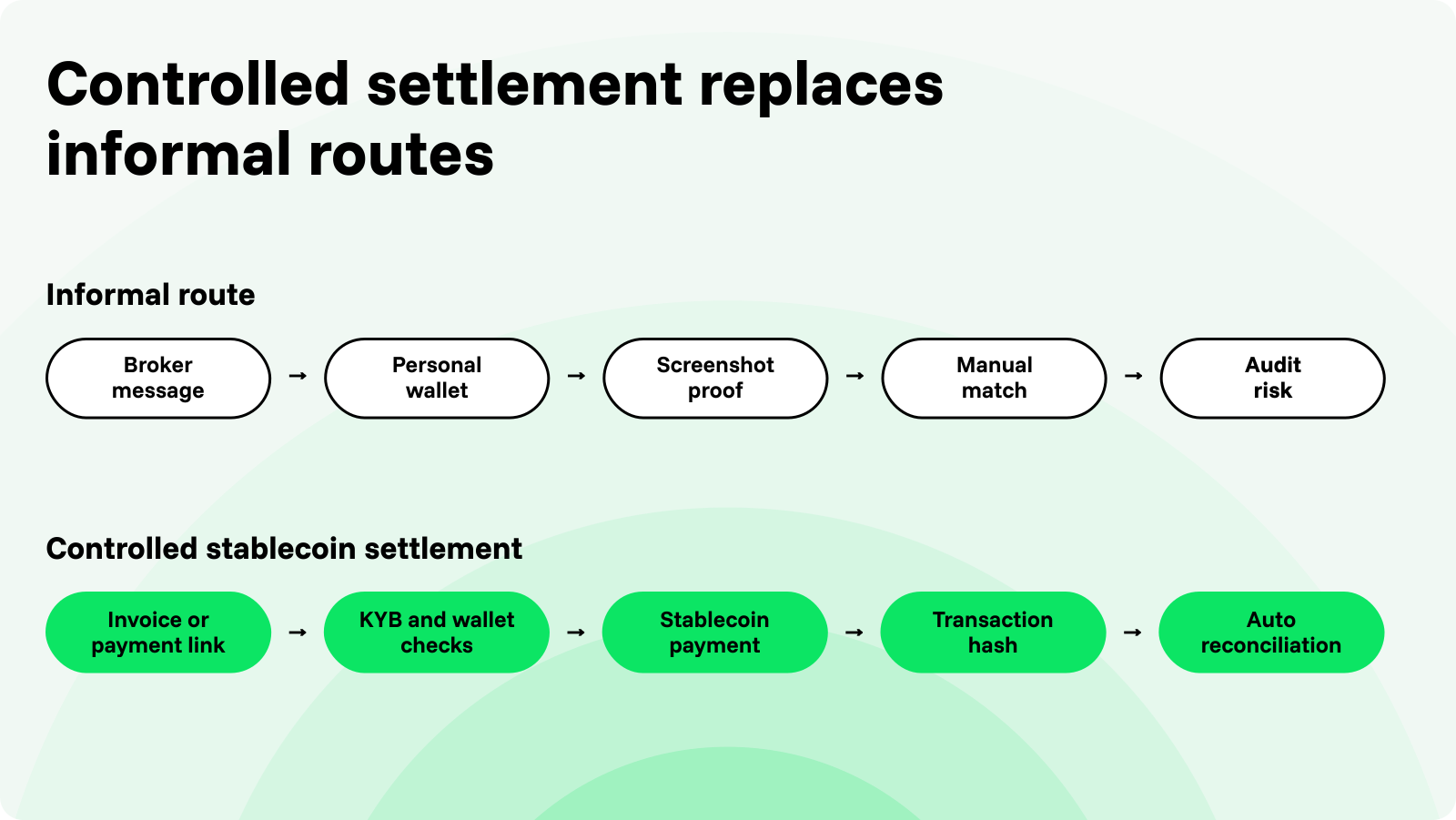
Every business is going to have its own needs, but these core elements are required in every system:
- Invoice links, dedicated addresses, and clear references.
- KYB, AML monitoring, and wallet screening.
- API links for ERP and accounting systems.
- Role permissions for treasury and finance users.
- Reports for reconciliation, tax, and vendor review.
- Bank withdrawal routes for treasury sweeps.
Put together, these features help ensure the finance team no longer has to chase screenshots and messages across the network.
The future of cross-border payments in hardware distribution
In late 2025, BIS reported that only 55% of wholesale and remittance payments were credited within one hour, against a 75% target set for G20. The same report said end-user progress remains modest. Traditional bank rails are improving, but many corridors still need better speed and visibility.
Hybrid fiat and crypto settlement models give hardware distributors more control. Fiat remains useful for payroll, local taxes, and bank reporting. Stablecoins can handle supplier payments, treasury sweeps, and difficult corridors with stronger transparency.
Gaming hardware distributors are looking for payments that don’t involve complex chains of local brokers that stall shipments for months on end. Payments are moving into a more predictable and organized space where same-day settlements are the main goal.
Final thoughts
Payment delays affect more than finance. They block stock, slow delivery, weaken supplier trust, and tie up cash. In gaming hardware distribution, that cost can spread across a full order cycle.
Blockchain infrastructure and stablecoin settlements give distributors another controlled route for international supplier payments. This way, they can collect from difficult corridors with clear records, faster confirmation, and less reliance on informal intermediaries.
FAQ
They are business payments sent across national borders. In hardware distribution, such payments cover supplier invoices, spare parts, license fees, and service contracts.
In complex chains like hardware distribution, cross-border payments can involve a lot of different steps and intermediaries. The main risks are payment delays, FX conversion, bank fees, compliance reviews, failed transfers, and weak status visibility.
Use routes with clear fee rules, fewer intermediaries, and upfront terms. Stablecoin settlement can help reduce broker deductions and create a more predictable route for hardware.
Many blockchain transfers are confirmed in seconds or minutes. Final timing depends on the network, wallet checks, and the provider’s compliance process.
They pass through bank routing that involves slow compliance checks. Banking also often has cut-off times, local holidays, and intermediary reviews. Alternatively, these payments often pass through local brokers, and different systems have their own challenges that are hard to unify across a single system.
Stablecoins add a traceable transaction hash, predictable value, 24/7 settlement, and clearer invoice matching.
Yes, for many B2B corridors. The right setup still requires compliance and involves KYB, AML monitoring, invoice records, and treasury reporting.
The best will support stablecoin payments and fiat withdrawals for distributors looking to receive value without looking to hold cryptocurrencies. CryptoProcessing offers tailored solutions for gaming hardware distributors.