
Stablecoins are becoming a common option for companies that send money across borders. USDC, USDT and other fiat-linked digital currencies can transfer value through blockchain networks at any time of day.
Bank payments have also become faster. Swift reports strong improvements in international payment speeds:
- 75% of payments on the Swift network reach the beneficiary bank within 10 minutes.
- 24/7 availability via blockchain stablecoin transfers, negating banking hours.
Reaching the beneficiary bank does not always mean the payment is complete. Regulatory checks, currency conversion and local banking processes can add extra time before the recipient can use the funds.
Stablecoins can work well when a company needs frequent international settlement. They are also useful when counterparties can receive digital dollars and the finance team can manage conversions between fiat and stablecoins.
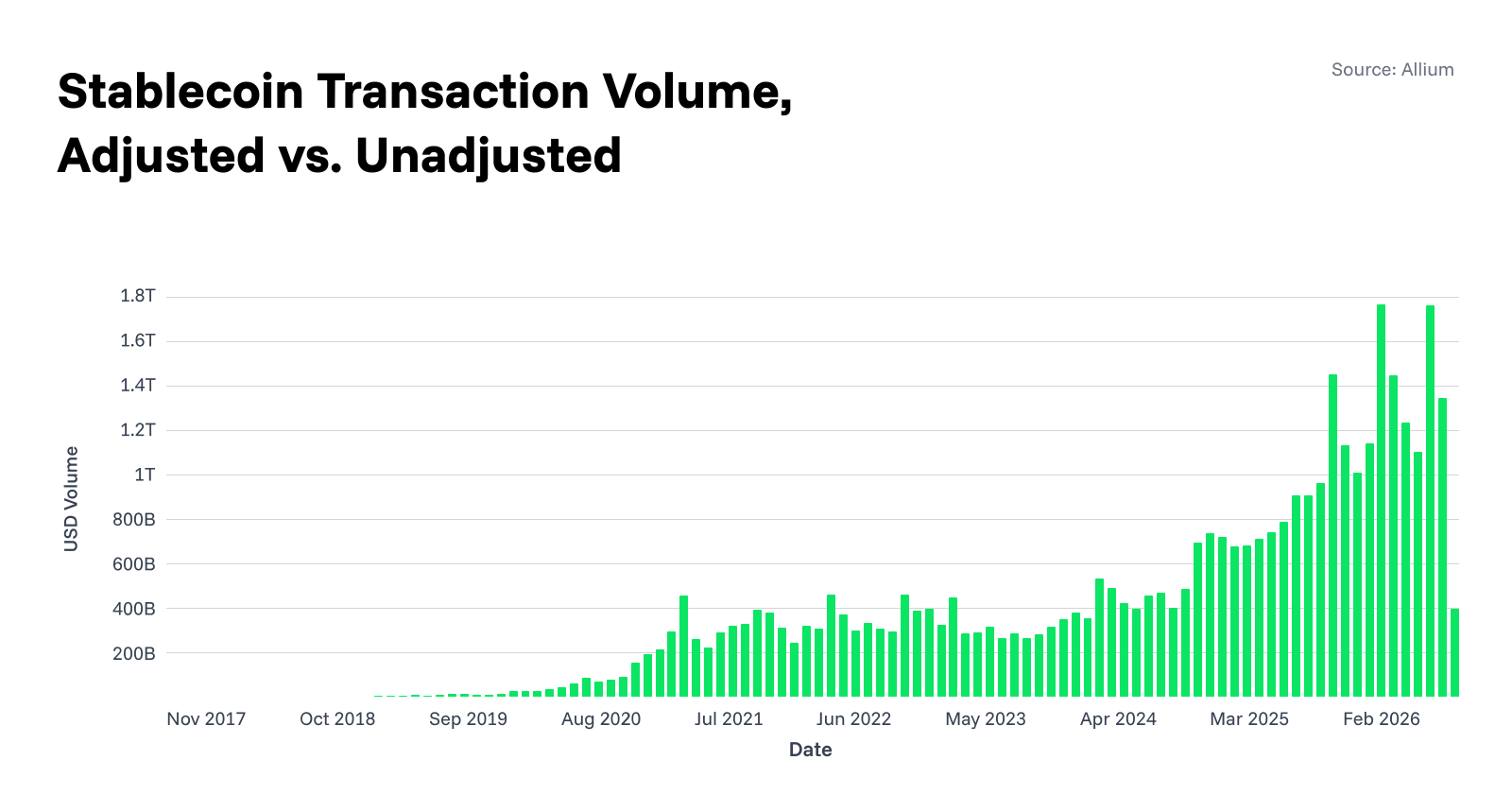
Visa’s Onchain Analytics data shows significant stablecoin activity during weekends. This gives companies another option when payments need to continue outside normal banking hours.
Bank transfers and local payment systems can still suit many transactions. They may work better when suppliers want local currency, payments are occasional or the company has limited experience managing digital assets.
Finance teams therefore have three main options: stablecoins, traditional payment methods or a combination of both.
Quick answer: when should businesses use stablecoins?
Stablecoins work best when speed, timing or cross-border costs create a real business need.
| When to use | Why | |
|---|---|---|
| Stablecoins | Payments are frequent | Especially across several countries or banking systems |
| Settlement speed is important | Supplier payments, treasury transfers, or weekend settlement | |
| Banking costs are high | FX fees or correspondent banks make traditional transfers expensive | |
| Traditional payments | Local payments are already fast and inexpensive | No cross-border friction to solve |
| The recipient needs local currency | Avoids unnecessary conversion steps | |
| Hybrid model | You have both cross-border/time-sensitive payments and routine local ones | Stablecoins handle the former, banks and local payment methods cover the rest |
Why cross-border settlements remain inefficient
A euro payment from a company in France to a supplier in Germany may arrive quickly and with little effort. A payment from Europe to a supplier in Brazil, where money has to pass through different banks and currencies, can take longer and cost more.
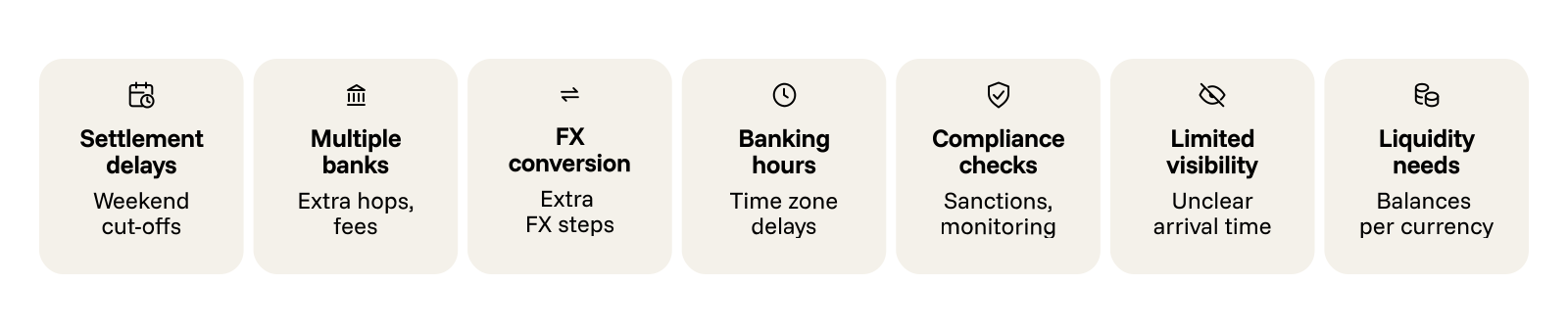
Common sources of friction include:
- Settlement delays. Cut-off times, weekends and local processing procedures can affect when funds become available.
- Multiple intermediaries. Correspondent banks can add additional processing stages and fees.
- FX conversion. Payments may require one or several currency conversions before reaching the beneficiary.
- Banking hours. Treasury teams operating across time zones can encounter delays after daily cut-offs.
- Compliance reviews. Payments can be paused for sanctions screening, transaction monitoring or additional documentation.
- Limited visibility. Finance teams may know that a payment has left one account without immediately knowing when the recipient can use the funds.
- Liquidity requirements. Companies may maintain balances across several currencies or accounts to keep international operations running.
How stablecoin settlements work
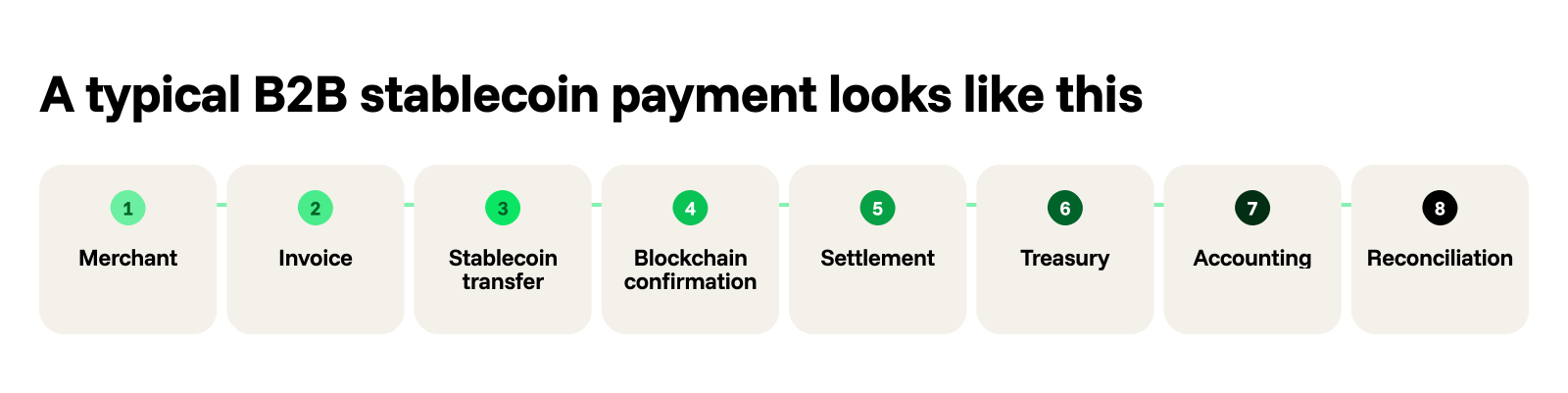
Example: A company can buy USDC or USDT with treasury funds and send it to a supplier. The payment is recorded on the blockchain and can be added to the company’s accounting records. The supplier then has several options. It can hold the stablecoins, use them for another payment or convert them into local currency.
If you are new to crypto and stablecoins, our ‘What Are Stablecoins?’ guide will help you understand how fiat-backed digital currencies work.
Stablecoin settlement decision framework
Finance teams can evaluate stablecoin settlement across four gates.
- Corridor
Which countries, currencies, and payment systems are involved? Does the current route mean high FX costs, slow settlement, or limited banking hours? - Counterparty
What can the recipient actually use? A supplier willing to hold USDC has very different economics than one needing instant conversion into a thin local currency. - Treasury
What’s the full liquidity requirement? You need a clear process for acquiring, holding, converting, and managing working capital in stablecoins. - Controls
Can compliance, wallet security, approvals, and reconciliation be handled consistently — not as exceptions?
If all four gates hold, stablecoin settlement fits into normal financial operations.
When stablecoins make sense
Stablecoins tend to deliver the greatest value where the existing international payment process contains identifiable friction.
International supplier payments
A company buying services or goods internationally may face intermediary charges, FX spreads and delays between sending money and the supplier receiving usable funds. If the supplier accepts stablecoins, the parties can settle the invoice directly over a blockchain network. This can be particularly useful for repeat payments where both companies already maintain stablecoin balances.
Intercompany settlements
Companies with subsidiaries across several markets frequently transfer funds between entities. Stablecoin treasury can give a group another mechanism for rebalancing liquidity between approved corporate accounts, particularly when entities operate across different time zones.
Governance remains important. Intercompany transfers still need appropriate accounting, tax documentation and local regulatory treatment.
Treasury rebalancing
International companies often distribute liquidity across several banks, currencies and jurisdictions. Stablecoins can provide a common digital-dollar balance that remains transferable outside local banking hours. Treasury teams can then move funds between approved wallets before converting them when required.
High-value B2B payments
Percentage-based banking charges, intermediary costs or inefficient FX become more significant as payment values increase.
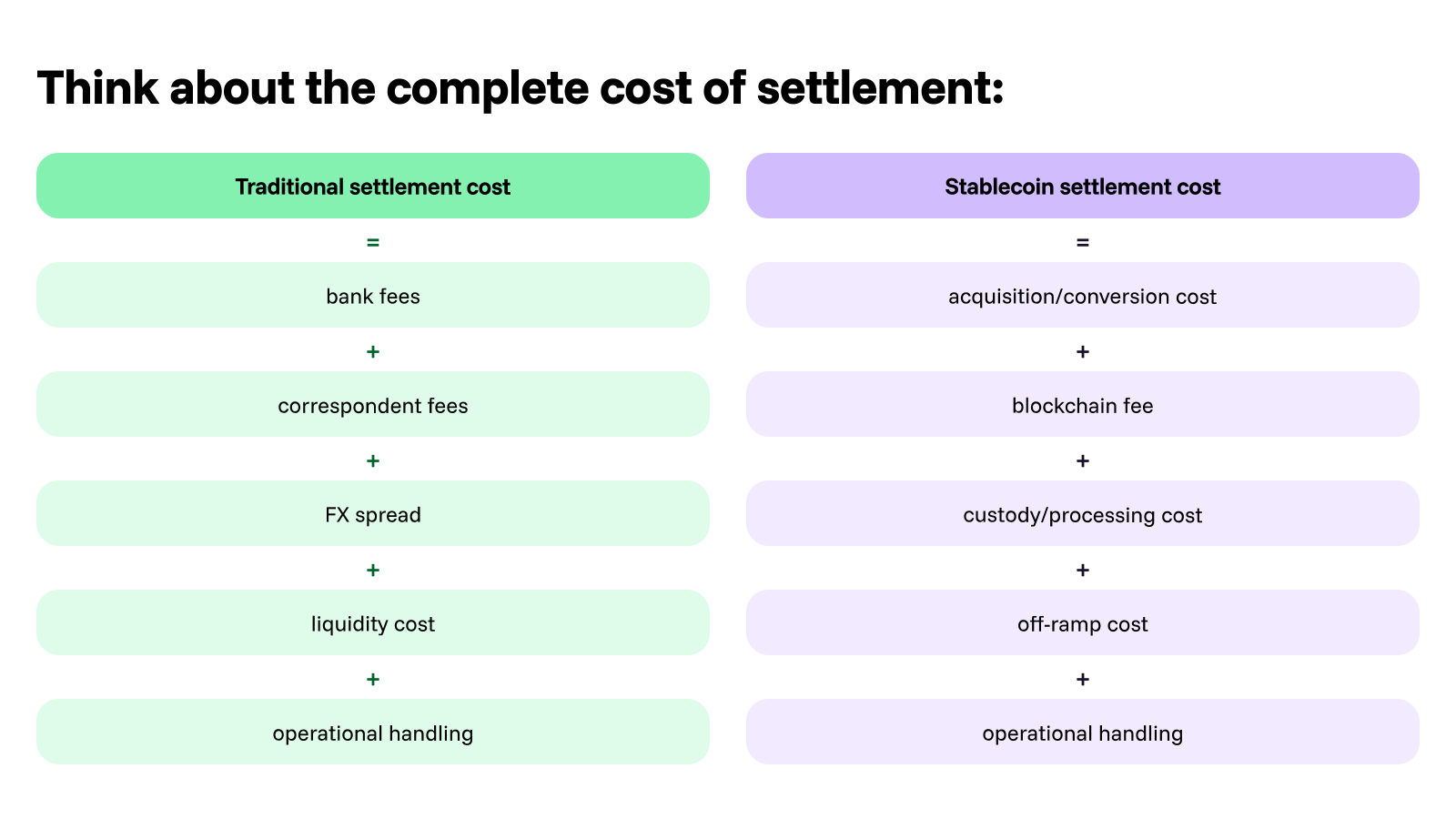
Finance teams should compare these totals rather than blockchain transaction fees against bank transfer fees alone.
Emerging-market corridors
Stablecoins may offer particular value where access to dollar liquidity is difficult, correspondent banking coverage is limited or international settlement is inconsistent.
Local law and currency controls remain essential considerations. The technical ability to transfer a stablecoin does not remove the recipient’s regulatory obligations.
Weekend and after-hours settlement
International businesses rarely operate on a single banking timetable. A company needing to pay a supplier late on Friday may otherwise face a delay before conventional banking processes resume. Blockchain settlement can continue through evenings, weekends and public holidays.
Improving working capital
Faster settlement can reduce the amount of money trapped between counterparties. A company that knows exactly when funds become available can manage treasury balances more precisely, while suppliers may require smaller payment buffers when settlement becomes predictable.
When stablecoins may not be the best option
Stablecoin settlements create another option for finance teams rather than an automatic replacement for every international payment.
Several situations favour established payment methods.
1. The supplier only accepts local fiat
If a supplier needs PLN, BRL or JPY in its bank account, a USD stablecoin must eventually be converted. That conversion can introduce an exchange spread, off-ramp fee and additional operational stage. A well-priced fiat transfer may produce a better result.
2. Regulatory restrictions affect the corridor
Stablecoin regulation differs between jurisdictions and continues to develop. Finance teams need to assess permitted assets, issuer requirements, custody arrangements, transaction screening and local rules before adding international stablecoin payments.
3. Domestic payments already work efficiently
A company sending low-value domestic payments through a mature instant-payment system may gain little from blockchain settlement. Established domestic payment methods can provide rapid settlement, familiar accounting and excellent local coverage.
4. Accounting systems cannot support the process
A blockchain transaction still has to enter the company’s books. Without appropriate ERP (Enterprise Resource Planning), transaction identification, wallet records and reconciliation processes, faster transfer execution can create more work for accounting teams.
5. Treasury readiness is limited
A company needs policies governing approved stablecoins, networks, wallets, counterparties, approvals and liquidity. An occasional manual transfer from an unmanaged wallet creates operational risk rather than treasury efficiency.
6. Payment volume is low
Businesses making only a few international payments per year may find their existing bank arrangements adequate. The efficiency gains from stablecoin payment infrastructure generally become more meaningful when similar transactions happen repeatedly.
Stablecoin settlement decision matrix
| Business scenario | Stablecoins | Traditional payments | Hybrid approach |
|---|---|---|---|
| International supplier accepts USDC | Strong fit | Possible | Strong fit |
| Supplier requires local fiat | Possible with off-ramp | Strong fit | Strong fit |
| Weekend settlement required | Strong fit | Depends on corridor | Strong fit |
| Frequent intercompany transfers | Strong fit | Strong fit | Strong fit |
| Low-value domestic payments | Limited advantage | Strong fit | Usually unnecessary |
| High-value international B2B payment | Strong fit | Depends on FX/corridor | Strong fit |
| Restricted jurisdiction | Depends on local rules | Often preferable | Depends on rules |
| Company lacks crypto treasury controls | Poor fit initially | Strong fit | Useful after preparation |
| Emerging-market supplier payments | Often useful | Corridor dependent | Strong fit |
| Recipient wants both fiat and digital dollars | Strong fit | Possible | Strong fit |
Stablecoins vs traditional cross-border settlement
The comparison changes considerably by payment corridor.
| Factor | Stablecoin | Traditional |
|---|---|---|
| Speed | Seconds to minutes | Minutes to banks; final credit varies |
| Operating hours | 24/7 | Depends on banks and local systems |
| Cost | Network, conversion, liquidity | Bank, correspondent, FX |
| Transparency | Continuous on-chain tracking | Depends on institution |
| FX exposure | Low if same-currency; conversion adds exposure | Depends on currency pair and provider |
| Liquidity | Transferable treasury balances | Split across banks and currencies |
| Automation | API-native | Available via banking APIs too |
| Settlement certainty | Strong post-confirmation, issuer-dependent | Depends on bank acceptance and compliance |
| Reconciliation | Needs wallet/blockchain integration | Fits existing finance systems |
| Counterparty coverage | Needs recipient readiness or off-ramp | Very high via global banking |
Indeed, stablecoin vs Swift has limited value as a universal question. The finance team needs to compare two complete settlement routes within a specific corridor.
Hybrid payment strategies
A modern treasury can support several settlement methods at the same time. A business might use:
- bank transfers for suppliers requiring local fiat;
- USDC for international suppliers already holding digital dollars;
- local instant-payment systems for domestic invoices;
- stablecoins for weekend treasury movements;
- traditional FX providers for currencies with deep institutional liquidity.
Payment orchestration can route each transaction according to cost, urgency, currency and recipient preference.
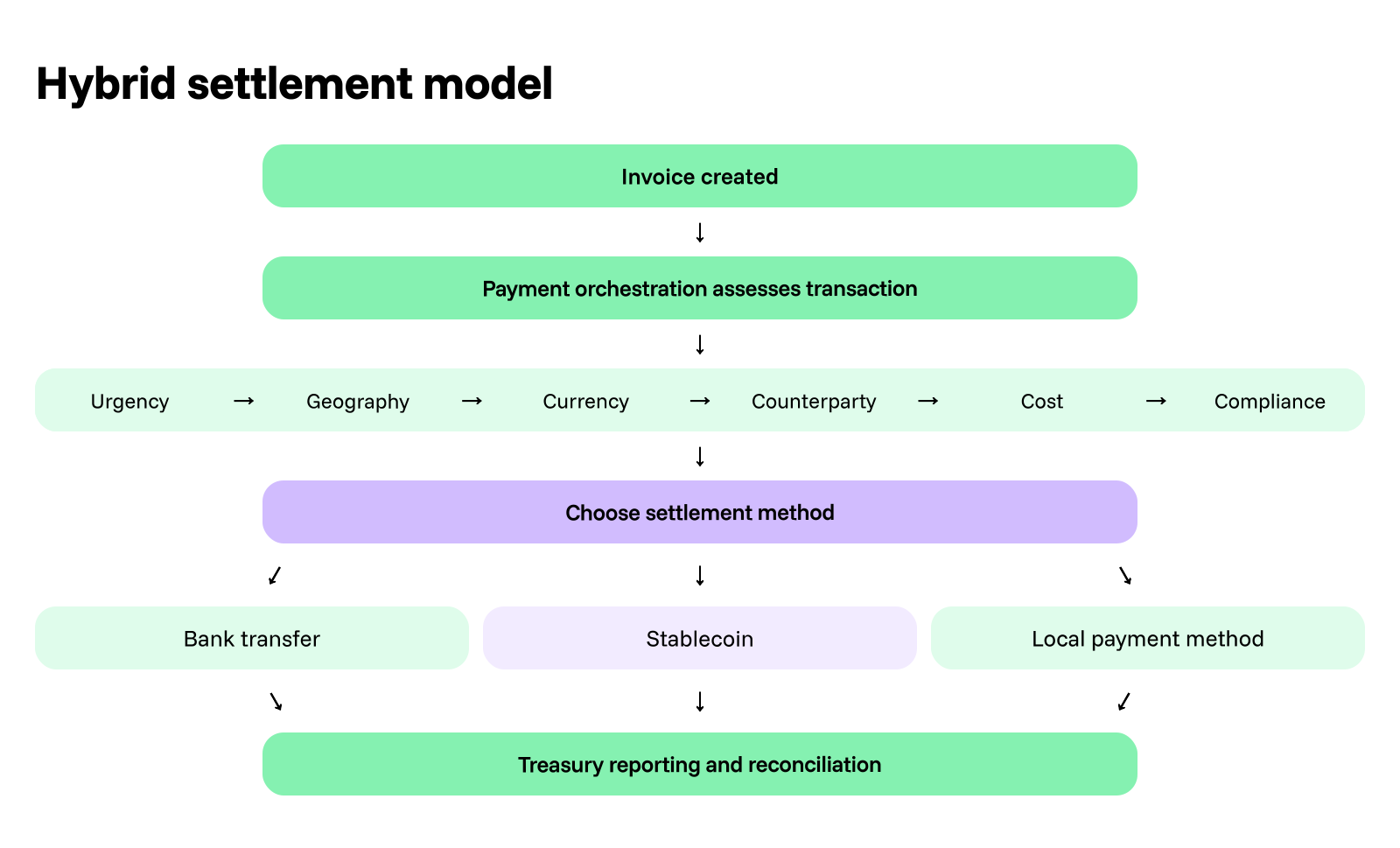
Businesses building this type of setup can use Stablecoin Payments alongside conventional treasury accounts – a Crypto Business Account can connect digital-asset payments, treasury and fiat settlement within a company environment.
How finance teams evaluate settlement options
A CFO or treasury team can evaluate each payment using seven variables.
- Payment urgency
How quickly must the recipient have usable funds? A blockchain confirmation provides limited value if the recipient plans to convert the payment several days later. It becomes more valuable when immediate access affects inventory, services or contractual deadlines. - Geography
Compare the actual countries and institutions involved. Payment performance differs significantly between corridors. - Counterparty readiness
Confirm whether the recipient can accept the proposed stablecoin and blockchain network. - Currency requirements
Determine the currency the recipient ultimately needs. A USD stablecoin can reduce some transfer friction while still requiring USD-to-local-currency conversion. - Treasury policy
Define approved assets, networks, balance limits and counterparties. - Compliance
Review sanctions screening, AML procedures, local regulation and transaction documentation. - Total cost and settlement certainty
Calculate every stage of the transaction. A finance team should select the route with the strongest combination of cost, timing and certainty rather than defaulting to the payment method with the lowest visible transaction fee.
Stablecoins can take a payment that used to take days and settle it in minutes. That’s the real shift. The opportunity is making that speed count all the way through, from treasury account to usable funds.

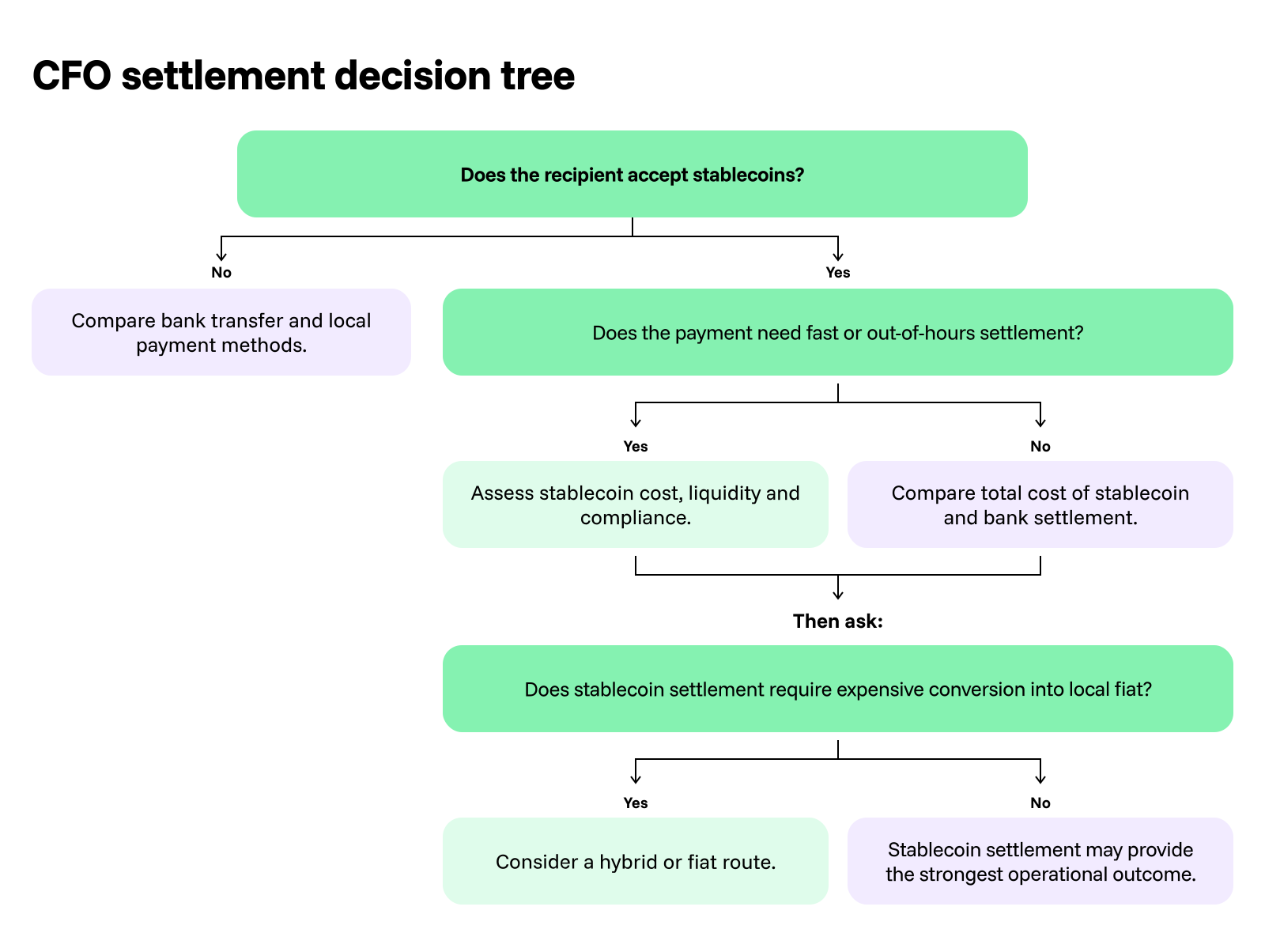
Building a modern cross-border settlement strategy
Adding stablecoins to treasury operations works best as a controlled implementation rather than a collection of manual wallet transfers.
A typical adoption roadmap can include:
- Find the problem area – identify corridors with high costs, slow settlement or frequent payment issues.
- Choose one use case – start with supplier payments or intercompany transfers.
- Set the rules – approve stablecoins, networks, wallets, limits and access controls.
- Connect operations – link payments with accounting or ERP systems and automate repeat transfers where useful.
- Measure and expand – track cost, speed and reconciliation, then add more corridors where the results justify it.
Companies paying overseas suppliers, contractors or partners can also use Crypto Payouts or Mass Crypto Payouts. CryptoProcessing supports stablecoin payouts through APIs or batch payments.
Businesses looking at international payments in more detail can also read How to Use Crypto for Cross-Border Payments and CBDCs vs. Stablecoins: Business Implications.
Stablecoin readiness checklist
Before using stablecoins for settlement, finance teams should check five areas:
- Counterparties – suppliers can receive the chosen stablecoin.
- Compliance – approved assets, networks and countries are defined.
- Treasury controls – wallet access, limits and approvals are in place.
- Conversion – the business can move between stablecoins and fiat when needed.
- Accounting – payments can be matched with invoices and reconciled correctly.
If these basics are covered, the company is in a much stronger position to introduce stablecoin settlement.
Stablecoins work best when businesses choose them selectively
Stablecoins can reduce settlement delays, extend payment availability beyond banking hours and give treasury teams another way to manage international liquidity. Their strongest use cases tend to involve frequent cross-border payments, counterparties already prepared to receive digital dollars and corridors where traditional settlement creates meaningful FX, timing or liquidity costs.
Traditional banking remains highly effective across many payment routes, especially where recipients require local fiat and modern bank networks already provide fast, inexpensive transfers.
Finance teams therefore gain the greatest flexibility from maintaining several settlement options and selecting between them according to payment type, geography, treasury policy and counterparty requirements.
Stablecoin settlement becomes valuable when the complete payment journey improves.
FAQ – stablecoins for cross-border payments
When should businesses use stablecoins?
Businesses should consider stablecoins when cross-border payments face meaningful settlement delays, banking-hour restrictions, costly intermediary processes or liquidity requirements. They are particularly useful when both counterparties can receive and manage stablecoins such as USDC or USDT.
Are stablecoins better than SWIFT?
It depends on the corridor. Swift reports that most payments on its network now reach destination banks quickly, while local processing can still extend the final stage. Stablecoins can offer an advantage for 24/7 settlement and direct wallet transfers. Finance teams should compare complete costs and final availability of funds rather than transaction speed alone.
Which stablecoins are best for B2B settlements?
Businesses generally look for stablecoins with deep liquidity, transparent reserves, reliable redemption routes, appropriate regulatory treatment and support from their payment providers. USDC and USDT are widely used, although suitability depends on the jurisdiction, counterparty and treasury policy.
Can businesses combine fiat and stablecoins?
Yes. A hybrid payment strategy can use stablecoins for selected international transactions while maintaining bank transfers and local payment methods elsewhere. This allows businesses to choose a settlement method according to each transaction.
What are the risks of stablecoin settlements?
Risks can include stablecoin issuer exposure, regulatory requirements, network selection, wallet security, liquidity, conversion costs, operational errors and reconciliation problems. Corporate policies and regulated payment providers can help manage these areas.
Do stablecoins reduce FX costs?
They can reduce FX costs when both parties already work in the currency represented by the stablecoin. If a recipient needs another local currency, an FX conversion is still required. Finance teams should compare the final conversion rate and fees with their existing banking arrangements.
How quickly do stablecoin payments settle?
Blockchain transfers can confirm within seconds or minutes depending on the network and required confirmation policy. The complete settlement timeline can be longer when fiat conversion or additional compliance processing is required.
Are stablecoins suitable for treasury management?
Stablecoins can support treasury rebalancing, intercompany payments, international supplier payments and liquidity management. Companies need policies covering custody, approved assets, transaction limits, accounting and compliance before incorporating them into treasury operations
What industries benefit most from stablecoin settlement?
Businesses with frequent international financial flows can benefit most, including marketplaces, digital services, technology companies, global payroll providers, e-commerce businesses, travel companies and firms working with international suppliers or contractors.
How should finance teams evaluate settlement methods?
Finance teams should compare payment urgency, geography, counterparty readiness, required currency, compliance, treasury policy, settlement certainty and total cost. The strongest method is the one producing the best end-to-end result for the specific payment rather than the fastest transfer at a single stage.